

Best Turntable Mats: Felt vs Cork vs Silicone vs Acrylic (Which Slipmat Is Best?)
Four slipmats, four personalities, small changes that quietly refine the ritual.
Slipmats are one of those upgrades that feel optional, until you change one and suddenly everything about your setup feels more intentional. The right mat can reduce static, tame resonance, protect your records, and subtly shape the way your system sounds.
Coming at this as a former DJ, I’ll say this plainly: slipmats have always been an essential part of a turntable setup. They’re something you think about early when cueing, handling records, and working the platter, but they’re also one of the places most casual listeners never really experiment once the turntable is set up at home. That’s a missed opportunity, because slipmats are one of the cheapest, simplest ways to improve how a turntable feels and behaves without changing the rest of your system.

It’s also worth keeping in mind, especially if you’re running a vintage or older turntable (something we here at Needle & Vine absolutely salute you for) that slipmats don’t last forever. Depending on the material, older mats can compress, harden, shed fibers, or slowly break down over time. When that happens, they stop doing the job they were meant to do: controlling resonance, reducing static, and protecting your records. Replacing a tired slipmat is often long overdue and can quietly bring a well-loved table back into balance
For this article, we tested four popular slipmat styles, felt, cork, silicone, and acrylic, each with a very different personality. None of these are luxury boutique pieces. They’re affordable, widely available, and realistic upgrades for everyday listening.
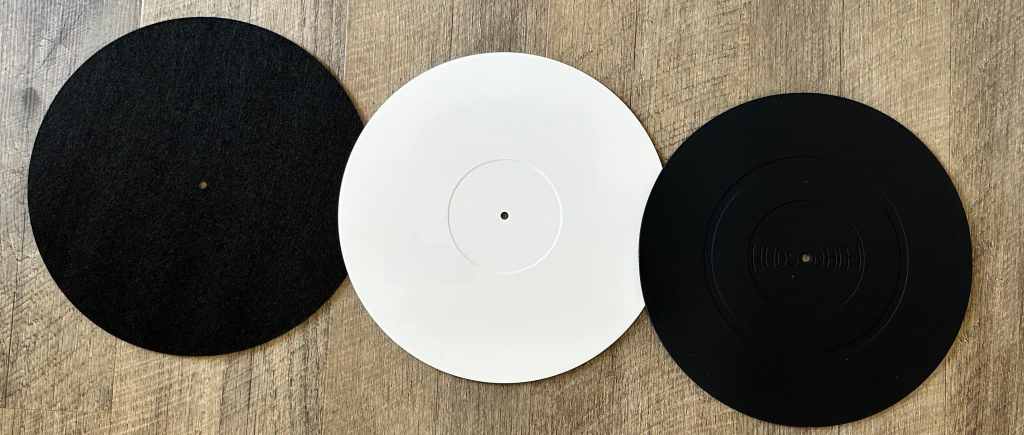
And finally, a small reminder: slipmats are personal. From aesthetics to texture to the way a record lifts off the platter, preference plays a real role here. A slipmat can improve performance, but it can also change how your turntable looks and how the ritual feels. Use our recommendations as a starting point, or branch out to something that simply appeals to you. That choice is part of the experience.
This article contains affiliate links. If you choose to buy through them, it helps support Needle & Vine at no extra cost.
Turntable Mat Comparison: Felt vs Cork vs Silicone vs Acrylic
| Material | Sound Character | Static Control | Grip on Record | Best For |
| Felt | Neutral but slightly loose bass | Poor | Low | DJs and casual listening |
| Cork | Slightly tighter bass and reduced resonance | Good | Medium | Everyday vinyl listening |
| Silicone / Rubber | Dampened, quieter background | Excellent | High | Static-prone environments |
| Acrylic | Clean, detailed presentation | Good | Medium | Audiophile setups and acrylic platters |
Each slipmat material changes the interaction between record and platter in subtle ways. Some prioritize static control, others emphasize resonance damping, while a few focus mainly on record grip and stability. None of them transform a turntable into something it isn’t, but the right mat can quietly refine the listening experience in ways collectors start to notice over time.
Below is a mroe detailed breakdown of how each material behaves, who it’s best for, and when it actually makes a difference.
Felt Turntable Mats – The Classic Starting Point

What it is: Felt mats are the most common slipmats for a reason. They’re lightweight, inexpensive, and come stock on many entry-level turntables.
What it sounds like: Felt doesn’t add much of its own character. It keeps things lively and open but doesn’t do much to control vibration or static.
Pros:
- Classic DJ and home-use standard
- Very affordable
- Easy record cueing
- Works well for casual listening
Cons:
- Can hold static
- Minimal resonance control
- Can cling to records when lifting
Curious how this compares on your setup?
Best for: New vinyl listeners, secondary turntables, or anyone who just wants a clean, simple mat that gets out of the way.
Cork Turntable Mats – Warm, Natural, and Static-Friendly

What it is: Cork mats are popular with audiophiles who want better vibration control without going fully rigid. Cork naturally absorbs resonance and reduces static buildup.
What it sounds like: Slightly warmer and more controlled than felt. Bass feels a touch tighter, and surface noise can be subtly reduced on some setups.
Pros:
- Reduces static
- Good resonance damping
- Lightweight but stable
- Easy upgrade from felt
Cons:
- Not as “slippy” as felt
- Can look utilitarian depending on taste
Curious how this compares on your setup?
Best for: Belt-drive turntables, vintage setups, or listeners who want a calmer, more grounded sound without overthinking it.
Silicone Turntable Mats – Quiet, Grippy, and Surprisingly Effective
What it is: Silicone mats are flexible, dense, and designed to grip the record firmly while absorbing vibration.
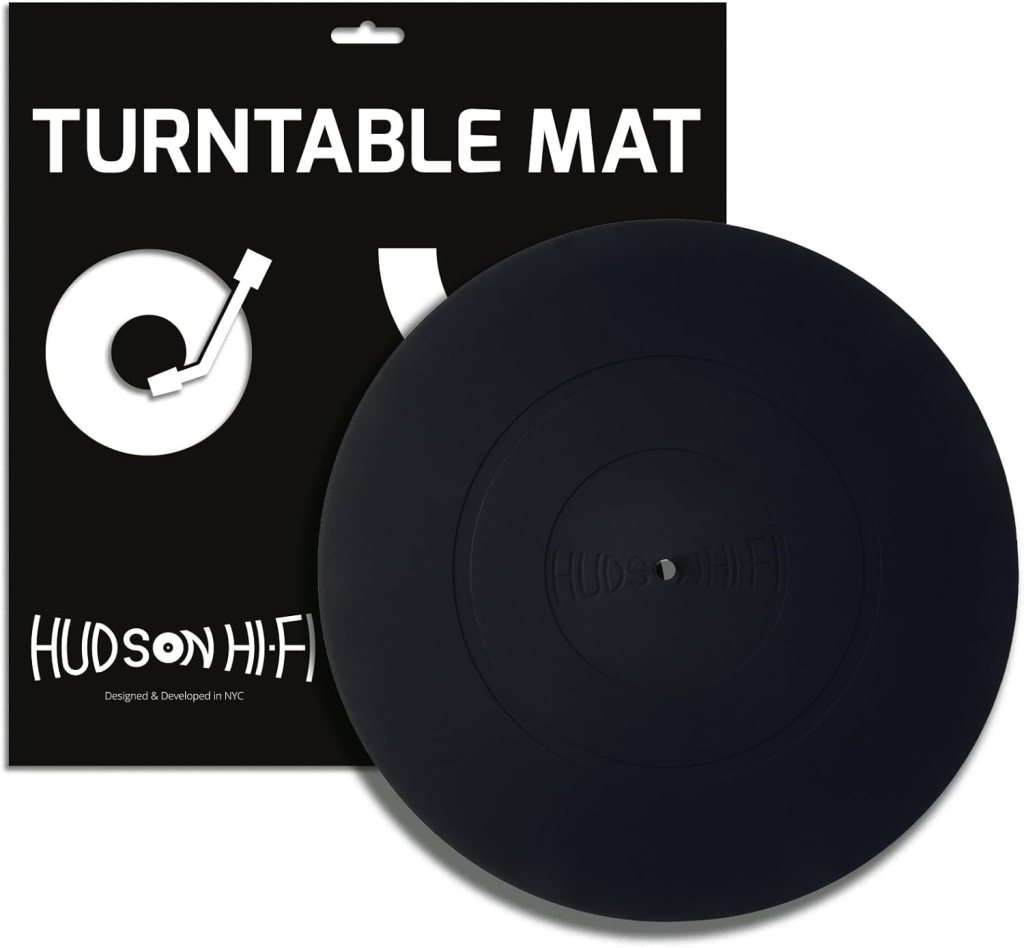
What it sounds like: Quieter backgrounds and more controlled playback. This mat reduces micro-movement between the record and platter, which can help clarity, especially on lighter platters.
Pros:
- Excellent vibration absorption
- Very low static
- Stays flat on the platter
- Easy to clean
Cons:
- Less traditional feel
- Not ideal for DJ cueing
Curious how this compares on your setup?
Best for: Modern turntables, lightweight platters, or anyone chasing quieter playback without changing hardware.
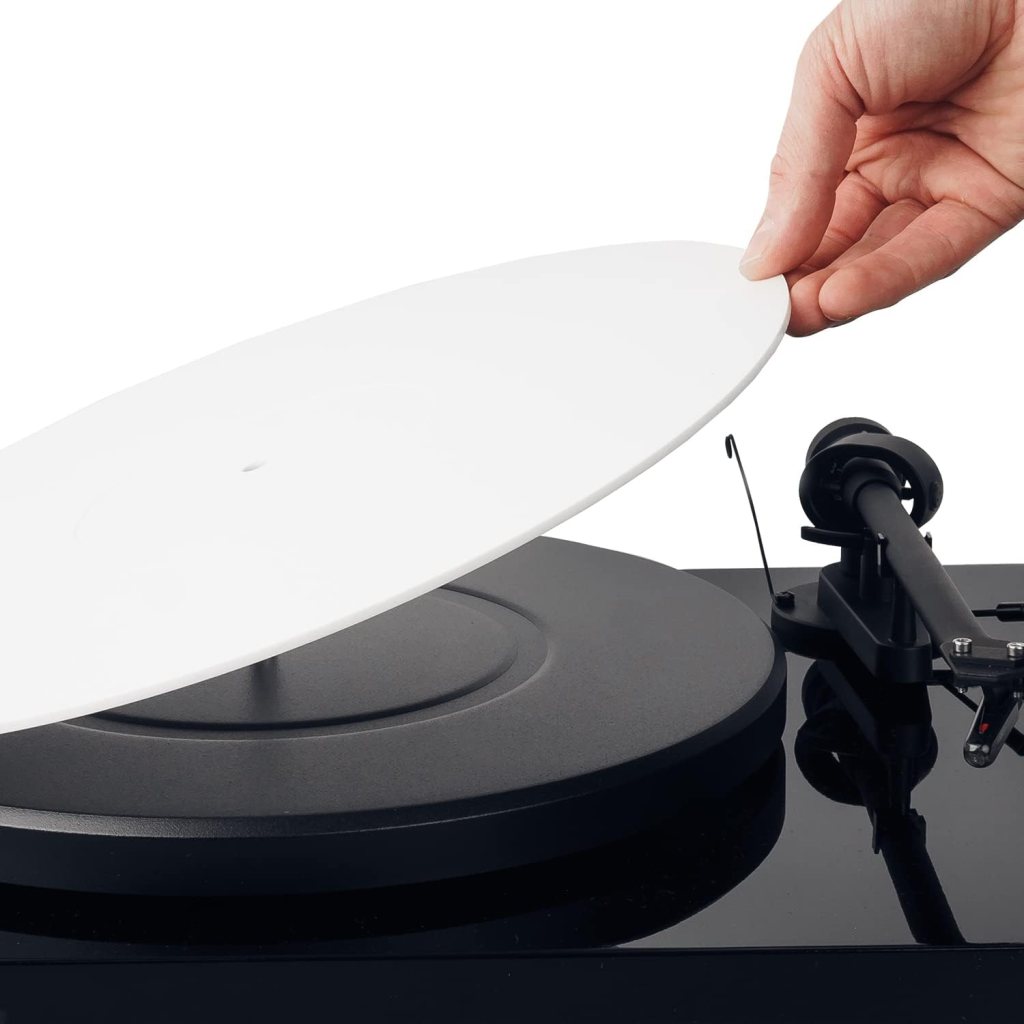
Acrylic Turntable Mats – Precision and Platter Control
What it is: Silicone mats are flexible, dense, and designed to grip the record firmly while absorbing vibration.
What it sounds like: Quieter backgrounds and more controlled playback. This mat reduces micro-movement between the record and platter, which can help clarity, especially on lighter platters.
Pros:
- Excellent vibration absorption
- Very low static
- Stays flat on the platter
- Easy to clean
Cons:
- Less traditional feel
- Not ideal for DJ cueing
Curious how this compares on your setup?
Best for: Modern turntables, lightweight platters, or anyone chasing quieter playback without changing hardware.
Final Note from Needle & Vine
Slipmats don’t transform a system, but they do fine-tune it. Think of them less like an upgrade and more like seasoning. The difference isn’t dramatic, but when it’s right, everything settles into place.
Sometimes the smallest changes are the ones that make you want to flip the record instead of skipping it.
And if you’re refining the ritual further, a dependable record brush and a system for cataloging and sorting your collection tend to matter more than dramatic upgrades. Small adjustments, made with intention, keep the music front and center.