
Best Inner and Outer Sleeves for Vinyl Records: A Simple Protection Guide
There are a few inexpensive and responsible things you should always have on hand if you’re going to collect vinyl for the long term. Inner and outer sleeves are two of them. You’re probably already familiar with inner sleeves. They’re the thin paper or plastic sleeves that actually hold the record inside its jacket. Pretty much all new records come with one, although the quality can range from a basic piece of folded paper to a much nicer anti-static sleeve.
Outer sleeves are easier to overlook.
(Affiliate links are included below, but like all recommendations here, they’re about usefulness, not hype.)
They’re the clear protective sleeves that go around the entire album jacket, and if you want that artwork to look nearly as good ten years from now as it does today, they’re worth using.
Sleeves are cheap. Vinyl isn’t.
And once you’ve scratched a record, worn the artwork on a jacket, or created years of shelf wear, there’s no easy way to undo it. Fortunately, protecting a record collection doesn’t require anything complicated or particularly expensive.

Why Vinyl Record Sleeves Are Worth Using
Every time you pull a record from the shelf, you’re handling two things worth protecting: the vinyl itself and the jacket surrounding it.
The inner sleeve primarily protects the record.
The outer sleeve primarily protects the jacket.
Neither is going to make your records sound better, and you certainly don’t need to spend a fortune on premium archival supplies. But good sleeves help reduce some of the everyday wear that slowly accumulates over years of owning and playing records. That’s particularly important if you buy used vinyl.
I’ve brought home plenty of older records where the vinyl was still surprisingly nice but the original paper sleeve was yellowed, torn, dusty, or barely holding together. I’ve also seen perfectly good jackets with ring wear and rubbed edges simply from spending decades sliding against neighboring albums.
A fresh set of sleeves won’t reverse any of that damage. They can help keep it from getting worse.
Inner Sleeves: Protecting the Vinyl
The inner sleeve is your record’s first line of defense when it’s sitting on the shelf.
At the most basic level, it keeps the vinyl from rubbing directly against the cardboard jacket. It also helps protect the record from dust, debris, fingerprints, and some of the static that tends to attract dust in the first place.
The problem is that not all inner sleeves are created equal.
What’s Wrong With Basic Paper Inner Sleeves?
There’s nothing inherently disastrous about a paper sleeve. Record companies have been putting vinyl in them for decades, and millions of records have survived just fine. But they’re not my first choice for long-term storage.
Paper can shed small fibers and dust. Older sleeves can become dirty, brittle, or torn. Sliding a record repeatedly in and out of a rough paper sleeve can also create light surface scuffs over time.
If you’ve just cleaned a dirty used record, putting it straight back into the same dusty 40-year-old paper sleeve also feels a little counterproductive. That’s why replacing basic paper sleeves is one of the easiest upgrades you can make to a collection.
Paper vs. Polyethylene vs. Rice-Paper-Style Sleeves
You’ll generally encounter a few different types of replacement inner sleeves.
- Paper sleeves are inexpensive and traditional. Better versions may include a polyethylene lining, which gives you the familiar stiffness of paper without having the vinyl directly against the paper surface.
- Polyethylene sleeves use a soft plastic material that allows the record to slide in and out easily while reducing direct contact with abrasive paper.
- Rice-paper-style anti-static sleeves typically combine layers of polyethylene with a paper insert that helps the sleeve maintain its shape. Despite the name, many aren’t actually made from rice paper.
For everyday collecting, I think a quality anti-static polyethylene or rice-paper-style sleeve is the sweet spot.
They’re inexpensive when purchased in bulk, easy to use, and a noticeable improvement over the aging paper sleeves found inside many older records.
What I Look for in an Inner Sleeve
I don’t think you need to overcomplicate this.
For most records, I want an inner sleeve that:
- Uses a soft, non-abrasive material against the vinyl
- Helps reduce static
- Doesn’t shed paper fibers
- Slides easily into a standard record jacket
- Holds its shape well enough that getting the record back inside isn’t an adventure
Buying them in packs also makes sense.
If you’re collecting vinyl regularly, this is one of those supplies you’ll eventually use.
Should You Throw Away the Original Inner Sleeve?
Not necessarily. There’s an important difference between a generic paper sleeve and an original printed inner sleeve. Some albums include lyrics, photographs, artwork, advertisements, liner notes, or other information printed directly on the original sleeve.
In those cases, that sleeve is part of the album. I keep it.
But that doesn’t mean the record itself has to remain inside it. You can put the vinyl into a fresh anti-static inner sleeve and keep the original printed sleeve inside the jacket alongside it.
That gives the record better everyday protection without separating the original packaging from the album. For collectible pressings, preserving those original pieces can also matter if you ever decide to sell the record.
Outer Sleeves: Protecting the Part Everyone Sees
Inner sleeves get most of the attention because they’re touching the record.
But outer sleeves solve a completely different problem. They protect the jacket.
Every time you slide an unprotected album onto a shelf, its jacket rubs against the records beside it. Do that hundreds of times over many years and the results begin to show. Corners soften. Colors rub away. Glossy surfaces become dull. Edges wear. Circular impressions from the record itself can eventually become visible through the jacket.
That’s the familiar “ring wear” you see on so many older albums. A clear outer sleeve creates a sacrificial layer between the jacket and everything around it. Instead of the original artwork taking the abuse, the inexpensive plastic sleeve does.
And when that sleeve eventually becomes scratched or cloudy?
Replace it.
That’s a lot easier than replacing an original album jacket.
A 60-Year-Old Elvis Record Is a Good Example
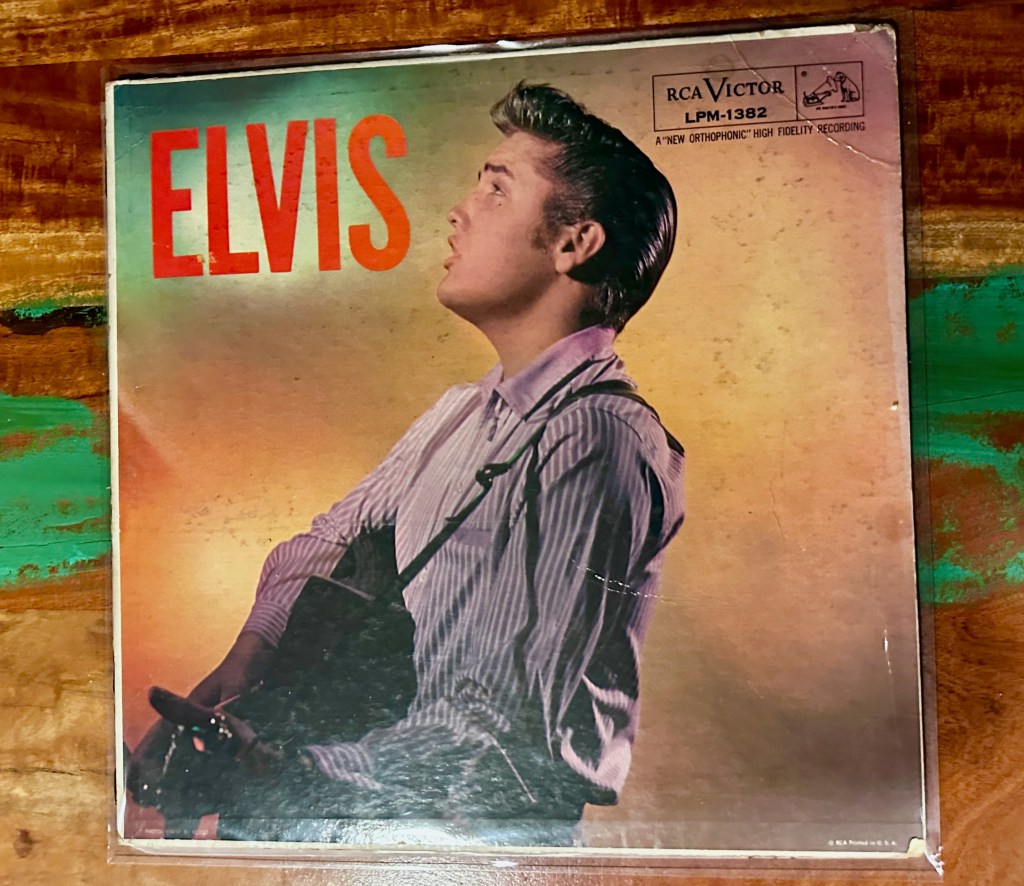
I recently picked up an older copy of Elvis Presley’s Elvis, and it’s a perfect example of why I think about record protection this way.
A nice copy of this album can be worth well over $100 on a good day, but there’s an important qualifier attached to numbers like that: condition.
My copy isn’t that specimen.
This record was clearly enjoyed extensively during its first 60-plus years of life. The jacket has a split seam, the vinyl has visible surface scratches, and somewhere along the way the original inner sleeve disappeared.
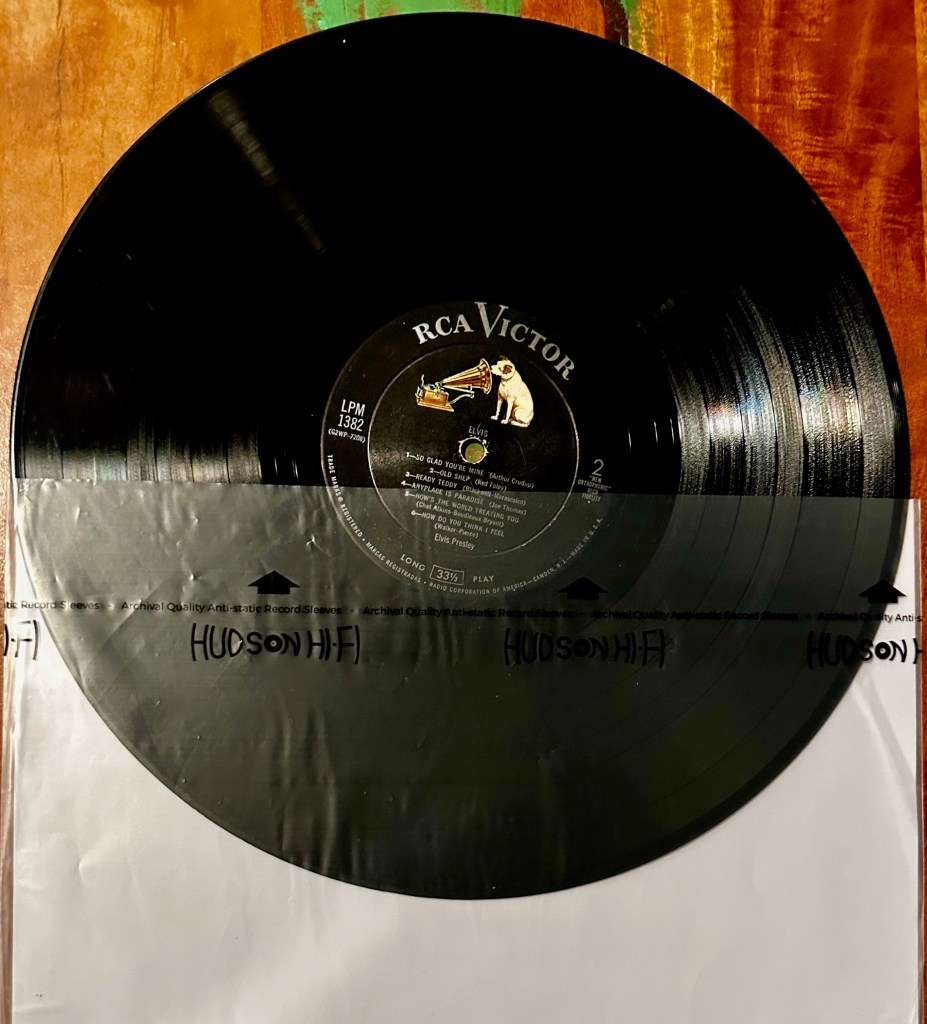
If you’re buying vintage vinyl, none of that should be particularly surprising. These records weren’t created to become collectibles six decades later. They were bought to be opened, handled, stacked, played, and enjoyed. And this Elvis record certainly appears to have done its job.
But here’s the interesting part.
After giving the record a good deep cleaning, I put it on the turntable and it played through.
It isn’t a pristine collector’s copy. It doesn’t suddenly become one because I cleaned it. The scratches are still there, the jacket still has its damage, and I’m not going to pretend otherwise.
But it’s still a playable 60-plus-year-old Elvis record. That’s pretty remarkable when you think about it.
So now it gets a fresh anti-static inner sleeve and the jacket gets a protective outer sleeve. The damage that’s already there can’t be undone. The goal now is to avoid adding unnecessarily to it. With reasonable care, there’s no reason this record can’t still be around and playable decades from now.
Preservation Doesn’t Have to Mean Perfection
I think this is an important distinction when talking about protecting a record collection.
Not every record needs to be perfect. A future buyer may not be looking for a museum-quality copy of Elvis. They may not be able to justify the price of one. They might simply want an original vintage copy that presents reasonably well and still plays.
For that person, condition still matters.
A split seam today doesn’t need to become a completely separated jacket ten years from now. Surface scratches don’t mean we should allow more dust and debris to accumulate on the vinyl. A missing original inner sleeve doesn’t mean the record should continue sitting unprotected inside the cardboard jacket.
A new inner sleeve and outer sleeve aren’t going to restore lost value.
They help preserve what’s left.
That’s really the point of using them in the first place. Whether you’ve just opened a brand-new $30 pressing or rescued a 60-year-old Elvis record that’s already lived a very full life, you’re giving that record a better chance of reaching its next owner in at least the same condition you found it.
And hopefully, it’ll still have plenty of music left in it when it gets there.

What Thickness Should You Buy?
Outer sleeve thickness is usually measured in mil.
And this is one of those areas where thicker isn’t automatically better. Very thin sleeves are inexpensive and provide basic protection, but they can feel flimsy and may wrinkle easily. Thicker sleeves generally feel more substantial and durable, but go too thick and they can become bulky, something you’ll notice quickly if you have hundreds of records packed onto shelves.
For a typical collection, somewhere around the middle is usually the sensible choice. You want enough material to protect the jacket without turning every album into a rigid plastic package.
The same philosophy applies to inner sleeves.
You don’t need the thickest or most expensive sleeve available. You need one made from an appropriate material that protects the record and is easy enough to use that you’ll actually use it.
A Simple Sleeve Setup for Most Vinyl Collections
You can make vinyl storage extraordinarily complicated if you want to.
For most collectors, I don’t think that’s necessary.
| What You’re Protecting | What I’d Use | Why |
| Vinyl record | Anti-static polyethylene or rice-paper-style inner sleeve | Soft surface, reduced static and easy handling |
| Album jacket | Clear polyethylene or polypropylene outer sleeve | Helps prevent rubbing, fingerprints and shelf wear |
| Original printed inner sleeve | Keep it with the album | Preserves the complete original packaging |
| Valuable or collectible records | Higher-quality archival materials | Worth considering for long-term storage |
That’s really all most collections need.
How I Sleeve Records in My Collection
My approach is simple.
When I bring home a used record, I first look at its condition. If it needs cleaning, I’ll take care of that before doing anything else.
Once the vinyl is clean and completely dry, it goes into a fresh anti-static inner sleeve. If the album has an original printed sleeve, I keep that with the album rather than throwing it away.
Then the entire jacket goes into a clear outer sleeve before returning to the shelf.
The process takes very little time.
And there’s something satisfying about taking an older record that arrived dusty, dirty, and neglected and returning it to the shelf cleaned and properly protected. That Elvis record is a good example. I can’t erase its first 60 years, nor would I necessarily want to. The wear is part of its history. What I can do is take better care of it from this point forward.
If you’re dealing with records that need more attention before getting new sleeves, I’ve also put together a guide on how to clean vinyl records on a budget using a simple manual process that doesn’t require an expensive record-cleaning machine. If you want to step it up a knotch, but not go crazy you can also consider the HumminGuru EZ Record Cleaner that I recently reviewed. It cost a little more, but will definitely speed up your cleaning process.
Clean first. Protect second.
It’s a simple routine that works.
Do You Need New Sleeves for Every Record?
Technically? No.
Practically? I think fresh inner sleeves are worth having around.
I wouldn’t automatically replace a perfectly good high-quality sleeve simply because it came with the record. But when I encounter an old, dusty, torn paper sleeve, I see very little reason to continue using it.
This is especially true after cleaning a record.
You’ve just gone through the trouble of removing years of dust and grime. Putting it back into the dirty sleeve it came from doesn’t make much sense.
Outer sleeves are a little more subjective.
If you have hundreds or thousands of unsleeved records, you certainly don’t have to buy enough sleeves to redo your entire collection this weekend. Start with the records you handle most. Protect new purchases as they enter the collection. Then work through the older ones when you have time.
Eventually, most of the collection will get there.
The Inner and Outer Sleeves I Recommend
You don’t need dozens of different sleeve products.
For most collectors, one good inner sleeve and one good outer sleeve will cover nearly everything.
My Pick for Inner Sleeves
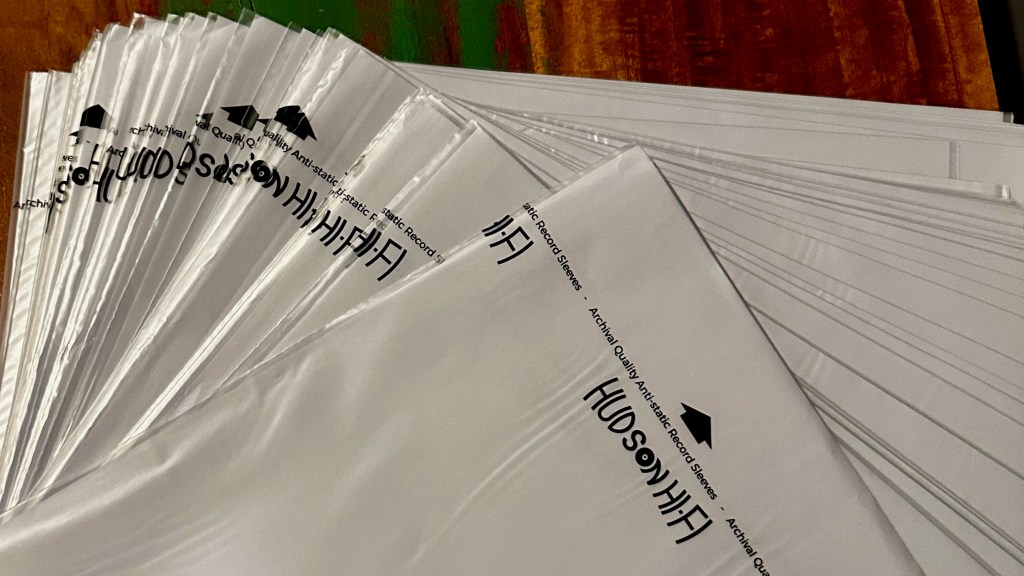
- Hudson Hi-Fi Anti-Static Vinyl Record Inner Sleeves – 50 Pack – Acid-free, rice-paper-style sleeves designed to protect records from scratches, dust, dirt, and static. Their soft construction makes them a practical replacement for old or damaged paper sleeves.
- Hudson Hi-Fi Archival-Grade Vinyl Jacket Outer Sleeves – 100 Pack – Flexible, crystal-clear polypropylene sleeves that help protect album jackets from fingerprints, dust, rubbing, and shelf wear. They’re anti-static and acid-free for long-term storage.
View the Hudson Hi-Fi Outer Sleeves
A Few Sleeves Cost Less Than Replacing One Record
Vinyl collecting isn’t a particularly cheap hobby.
Records, turntables, cartridges, cleaning supplies, storage, and all the other little things that come with the hobby add up quickly.
Inner and outer sleeves are one of the rare exceptions.
They’re inexpensive, they don’t require any special skills, and once you get into the habit of using them, you barely think about it.
More importantly, they protect both sides of what you’re collecting.
The inner sleeve protects the record you’re going to listen to.
The outer sleeve protects the artwork you’re going to see every time you pull it from the shelf.
And as that old Elvis record reminded me, preservation isn’t only about keeping perfect records perfect.
Sometimes it’s about taking something that’s already survived for decades and doing what you can to make sure its story doesn’t end with you.
You don’t need to treat every record like a museum piece. You just need to give it a reasonable chance of looking and playing as good ten years from now as it does today.
For the relatively small cost of a couple of sleeves, that seems like an easy decision.