
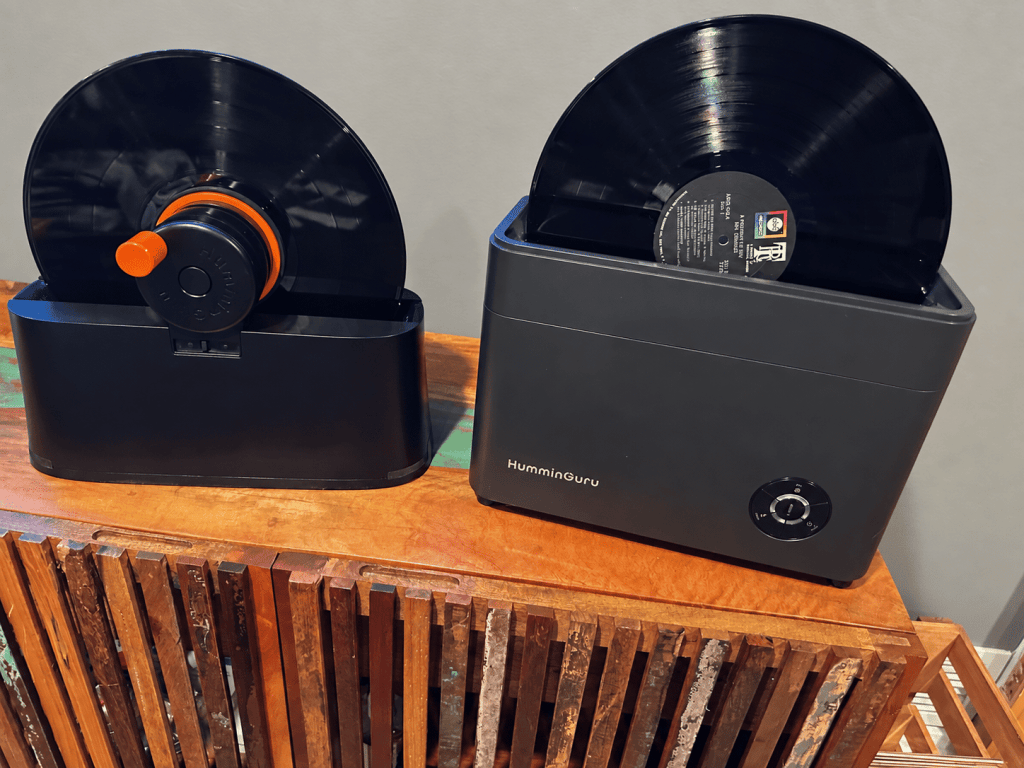
HumminGuru EZ vs HG01: Is the Ultrasonic Upgrade Worth It?
Why I Upgraded from the HumminGuru EZ
I want to start by saying that I genuinely love the HumminGuru EZ. It made cleaning records easier and more effective than the fully manual methods I had described and used before in previous articles. My decision to upgrade wasn’t driven by disappointment with the EZ. If anything, using it regularly showed me how valuable a good record-cleaning system could be.
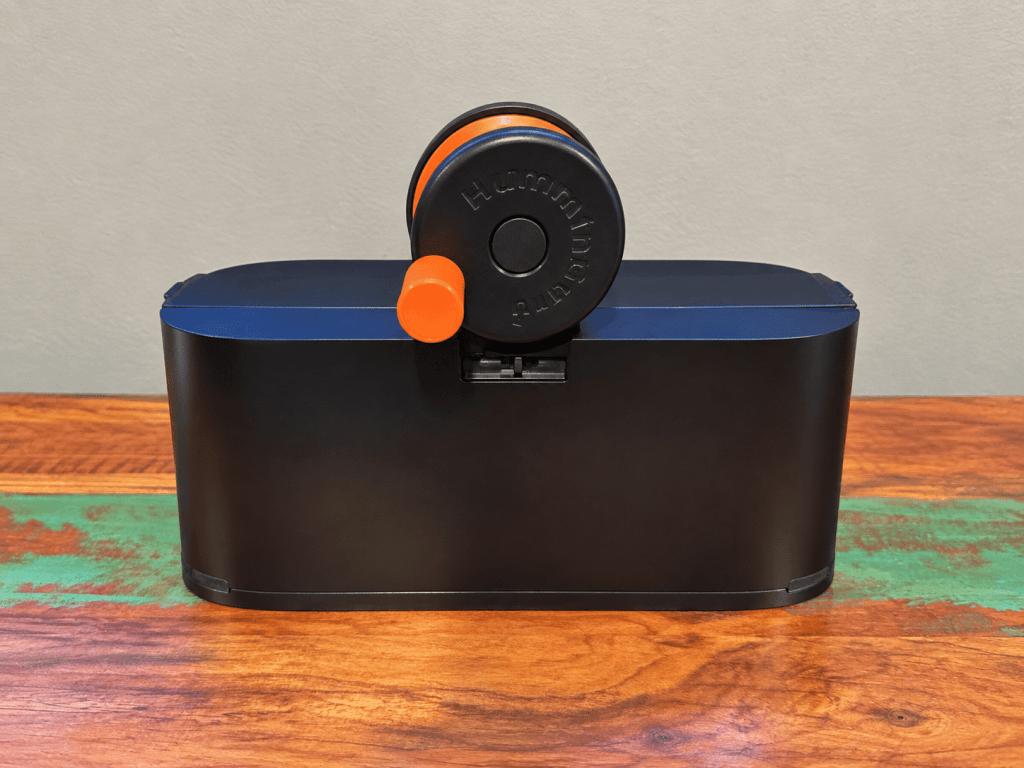
But even with the EZ, cleaning records still required more space and time than I expected. I needed room for the machine, the cleaning supplies, and a drying rack, along with enough time to clean each record and leave it out to dry. It was certainly an improvement over cleaning records entirely by hand, but the overall process still felt like something I had to set up and make time for.
I also found it difficult to judge the condition of the water inside the EZ. Because the cleaning chamber is surrounded by black plastic, I couldn’t easily tell how dirty the water had become or when it should be replaced. That left me wondering whether I was continuing to clean records with a genuinely clean water supply. Even if the water was still usable, not being able to see it clearly introduced uncertainty into the process.
After a few months, the EZ had made my life easier, but I still felt like I was putting a considerable amount of effort into cleaning and drying records. I wanted something that preserved the benefits of a dedicated record-cleaning system while reducing the setup, handling, drying time, and guesswork. That was what ultimately led me to consider the HumminGuru HG01.
Affiliate Disclosure: Needle & Vine is supported in part through affiliate partnerships. If you purchase a product or vintage component through links in this article, I may earn a small commission at no additional cost to you. These partnerships help support independent reviews, restorations, and new content.
HumminGuru EZ vs HG01: Quick Comparison
The most obvious difference between the HumminGuru EZ and the HG01 is the way they clean a record. The EZ uses a more hands-on mechanical cleaning process, while the HG01 uses ultrasonic cleaning. But the cleaning technology is only part of the upgrade. The larger difference is how much of the entire process each machine handles for you.
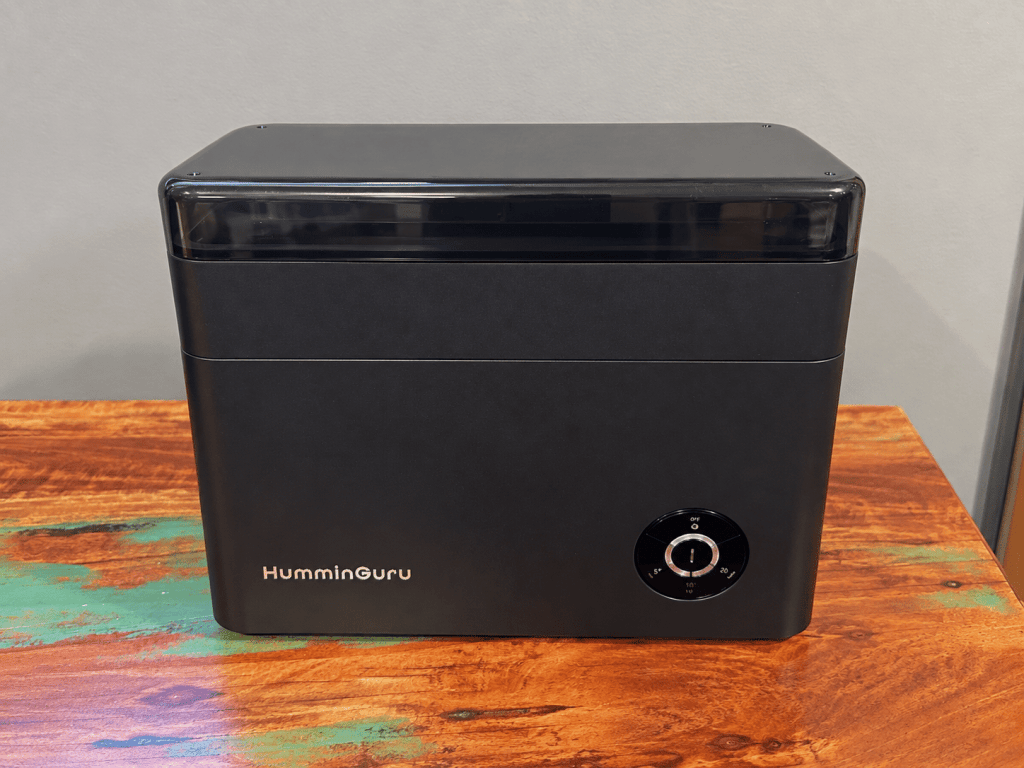
With the EZ, I am still actively involved in cleaning the record, managing the water or cleaning solution, removing the record, and placing it on a rack to dry. The HG01 combines more of those steps into an automated cycle. Once the record is loaded and the appropriate program is selected, the machine handles the cleaning, draining, and drying with considerably less intervention.
Record-size compatibility is another difference worth considering. The EZ includes what you need to clean standard LPs as well as 7-inch 45s. The version of the HG01 I purchased is equipped to clean 12-inch records out of the box. If you also want to clean 7-inch or 10-inch records, HumminGuru sells the required adaptors separately, adding to the overall cost of the machine. You can purchase a version that includes all the adaptors, but the cost jumps dramatically and you really should consider if that makes sense for you, especially the 10 inch adaptor.
The reduced hands-on time makes the HG01 much easier to fit into a normal listening routine. The tradeoff, of course, is price. The EZ remains the more affordable option and provides many of the benefits of a dedicated record-cleaning machine. The HG01 costs considerably more, particularly once optional adaptors are included, so its value depends on the records you own, how frequently you clean them, and how much you value ultrasonic cleaning, automatic drying, and a more hands-off workflow.
The table below summarizes the practical differences between the two machines. I’ll explore each of these areas in more detail throughout the article.
| Comparison point | HumminGuru EZ | HumminGuru HG01 |
| Cleaning method | Goat-hair brushes mechanically clean the record as it is turned by hand | Dual 40 kHz ultrasonic transducers clean the grooves without brushes contacting the record |
| Funcionamiento | Manually turn the handle in both directions to move the record through the cleaning solution | Select an automatic program or run the cleaning and drying stages separately |
| Drying | Remove the record and place it in the included rack to air-dry | Built-in dual-fan drying with 5- and 10-minute settings |
| Hands-on workflow | Requires manual rotation, removal, and placement in the drying rack | Mostly hands-off after the record is loaded and the program is selected |
| Water and cleaning solution | 950 ml basin; solution is manually filled, monitored, and drained | Up to 400 ml; solution automatically drains through a water filter into a removable tank |
| Cleaning capacity | Cleans one record at a time; the drying rack holds up to eight records | Cleans and dries one record at a time |
Is the HumminGuru HG01 Easy to Use?
Yes, the HumminGuru HG01 is easy to use, although it may not feel that way when you first take everything out of the box. The machine comes with several accessories, filters, replacement parts, and maintenance tools. Seeing everything laid out at once can make the setup appear more complicated than it actually is.
For your first cleaning, you can safely set most of those extras aside. Don’t throw them away, you will eventually need some of them for maintenance, but you do not need to understand every accessory before using the machine. HumminGuru includes enough replacement and maintenance supplies to keep the HG01 running for quite a while, so there is no reason to let the contents of the box make the initial setup feel overwhelming.
Start with the machine, its removable water tank, and the power supply. Then focus on the instructions for preparing the water, loading a record, and selecting a cleaning cycle. Once the record is in place and the program begins, the HG01 handles most of the remaining work for you.
The controls become familiar quickly. You can run the cleaning and drying stages separately when needed, but the five-minute Auto cycle will probably become your best friend. It is the setting you are likely to reach for during everyday cleaning because it provides a straightforward, mostly hands-off way to clean a record without turning the process into a project.
There is a small learning curve when working out the water level, cleaning solution, and different cycle options for the first time. But the HG01 is not difficult to operate. The unboxing experience is more daunting than the actual cleaning process, and after the first few records, using it begins to feel routine.
Cleaning My First Records with the HG01

My first attempt with the HG01 did not go entirely according to plan. I misunderstood the controls and selected the drying option instead of an automatic cleaning cycle. The machine immediately drained the water and began drying the record. That was entirely my fault, but it was also a quick lesson in how the controls worked.
On my second attempt, I selected the shorter two-minute cleaning option. This time, I could tell that the machine was running a cleaning cycle, but the record appeared to be barely getting wet. The distilled water seemed to roll away from the surface instead of spreading evenly across the grooves.
Distilled water alone has relatively high surface tension, which can prevent it from spreading evenly across a record. That appeared to be exactly what happened during my second attempt. Once I added a small amount of cleaning solution, I could immediately see the difference: the liquid spread more evenly across the vinyl as the record rotated.
HumminGuru sells its own cleaning agent, but GrooveWasher also makes G-Sonic, an ultrasonic concentrate formulated to reduce surface tension. GrooveWasher recommends adding just one drop to a filled HumminGuru bath tank. That makes it an easy alternative for anyone who does not want to experiment with a homemade cleaning mixture.
Ultrasonic Cleaning Additive
Try GrooveWasher G-Sonic
G-Sonic is designed to reduce water’s surface tension and help the cleaning solution spread more effectively across the record during ultrasonic cleaning.
Sponsored affiliate link. Needle & Vine may earn a commission from qualifying purchases.
Check G-Sonic Price on AmazonFor my third attempt, I added the cleaner and selected the five-minute automatic cycle. This time, I could see a consistent wet texture across the record as it rotated through the machine. The water was no longer pulling away from the surface, making it much easier to see that the cleaning process was working.
The result was similar to what I had experienced with the HumminGuru EZ, which also benefits from using a cleaning solution rather than water alone. The HG01 may use a different cleaning method, but both machines need the water to spread effectively across the record. Once I added that missing piece, the HG01 began working the way I had expected.
The Biggest Upgrade May Be Automatic Drying
Ultrasonic cleaning may receive most of the attention, but automatic drying could be the biggest practical upgrade the HG01 offers.
After waiting for ten or twenty records to dry in a dish rack or the drying rack included with the EZ, you begin to realize how long records can take to air-dry completely. I frequently found myself flipping them in the rack, hoping to speed things up, but the process still took much longer than you might expect.
You might be thinking that a drying rack allows you to clean several records at once and simply wait for all of them to finish drying. That is true, and plenty of collectors use that method every day. It works. But trust me when I say that the waiting becomes frustrating when you have just scored a stack of records at a thrift store and want to clean them quickly so you can find out what you brought home.
That is when the HG01’s built-in drying begins to feel like more than a convenience. Instead of cleaning a record, placing it in a rack, checking it, flipping it, and continuing to wait, the HG01 handles the drying as part of the process. When the cycle finishes, the record is much closer to being ready for the turntable or a fresh inner sleeve.
If you only buy records occasionally or clean a small batch every few months, manual drying may be perfectly manageable. Have a little patience and it will get the job done. But if you purchase used records regularly, the repeated cleaning and waiting gets old fast. Automatic drying removes one of the slowest and most tedious parts of the routine, and it may be the feature that makes the HG01 feel like a true upgrade rather than simply a different way to wash a record.
Does Ultrasonic Record Cleaning Make a Difference?
Comparing a record cleaned with the HumminGuru HG01 to one cleaned with the EZ, I can hear and see differences. In my experience, the HG01 produces the better overall result. That said, expectations need to remain realistic. Ultrasonic cleaning is effective, but it is not magic.
If you place an extremely dirty record directly into either machine, you may not be happy with the outcome. Heavy dust, fingerprints, grease, mold, and years of accumulated grime can be too much for a single cleaning cycle. An ultrasonic machine may reach deeper into the grooves, but it still works best when the worst surface contamination has already been removed.
For particularly dirty records, I recommend starting with a manual cleaning. Use the EZ or another appropriate method to remove the visible grime, then place the record in the HG01 for the final ultrasonic cleaning and drying cycle. The manual stage handles the heavy surface contamination, while the HG01 finishes the job by cleaning more deeply and removing what the first stage may have left behind.
In my opinion, the result is consistently better when the HG01 is used as the final step. Records often appear cleaner, and I have noticed improvements in playback after ultrasonic cleaning. However, sound quality is subjective, and the degree of improvement will depend on the record’s condition, pressing, and existing groove damage.
No cleaning machine can repair scratches or physical wear. If the noise is caused by groove damage rather than dirt, ultrasonic cleaning will not make it disappear. But when contamination is the problem, the HG01 gives me greater confidence that I have cleaned the record as thoroughly as I reasonably can.
Noise: Is the HumminGuru HG01 Quiet?
The HumminGuru EZ is manually operated and essentially silent. Aside from the sound of the record and brushes moving through the water, there is very little to hear. The HG01 is different. Ultrasonic cleaning produces a noticeable vibrating or humming sound, and the fans add more noise during the drying cycle.
The HG01 is not excessively loud, but I would not describe it as silent either. I put mine through what I call the “wife test” by running it while we were sitting in the same room. She noticed the sound immediately. It did not annoy her, but it was obvious enough that she commented on it.
Noise probably will not be a dealbreaker for most people, especially because each cycle runs for a relatively short time. Still, if you expect to clean records while listening to music, watching television, or sitting in a quiet shared room, the machine will make its presence known. If silent operation is important to you, this is something to consider before choosing the HG01 over the EZ.
Living with the HG01: Water, Filters, and Maintenance
I have not owned the HG01 long enough to give a meaningful long-term maintenance report. At this stage, I can explain the routine and share my early impressions, but questions about filter life, recurring costs, and reliability will need more time and considerably more cleaned records.
Here at Needle & Vine we have cleaned probably well over 300 records last year, and when you’re in that situation the water quality becomes a real question. When should you dump the water? Are you cleaning a dirty record in dirtier water? Unfortunately, I am not a scientist and I haven’t figured out an exact method for testing that yet.
What I can say is that the HG01 makes it easier to inspect the water than the EZ did. The cleaning solution automatically drains into a removable tank, allowing me to lift it out and look at the water between cleaning sessions. With the EZ’s dark basin, I often felt like I was guessing. The removable tank does not eliminate the judgment call, but at least I can see what I am working with.
I do not plan to replace the water after every record. That would create unnecessary waste and make the process more expensive and inconvenient than it needs to be. My early approach is to monitor the water visually and consider the condition of the records going into it. A batch of relatively clean records should allow the solution to last longer than a stack of dusty thrift-store finds.
The HG01 also uses a water filter to catch larger debris as the solution drains back into the tank. That filter should be rinsed regularly, allowed to dry completely, and replaced when it becomes visibly dirty or worn. There is also an air filter for the drying system, which will require occasional inspection and replacement.
None of this appears especially difficult, but it does add a few maintenance items to keep track of. I plan to update this section after I have cleaned more records and have a better sense of how frequently the water and filters actually need attention. For now, the routine seems manageable, and being able to inspect the removable water tank already feels like a practical improvement over the EZ.

Where the HumminGuru EZ Still Makes More Sense
The HumminGuru HG01 is the more convenient machine, but that does not make the EZ obsolete. The EZ remains a good choice for collectors who want a dedicated record-cleaning system without spending several hundred dollars on an ultrasonic machine.
If you clean records only occasionally, the additional cost of the HG01 may be difficult to justify. The EZ requires more hands-on effort and separate drying time, but it still makes the process easier and more consistent than cleaning records entirely by hand. For a smaller collection or a few cleaning sessions each year, that may be enough.
The EZ is also simpler mechanically. It does not require power, automated controls, air filters, or an internal draining system. There are fewer components to learn and fewer replacement parts to monitor. As long as you have the space and patience time for the drying rack rack, the process is straightforward.
It may also remain useful even after upgrading to the HG01. For a particularly dirty thrift-store-store record, I would rather remove the heavy surface contamination with the EZ before putting it through an ultrasonic cycle. That keeps the dirtiest material out of the HG01’s’s tank cleaning water and allows the ultrasonic machine to concentrate on what remains in the grooves.
The EZ therefore makes the most sense for someone who values a lower price and does not mind being actively involved in the cleaning process. It also works well as a pre-cleaning tool for records that need more than a single pass through the HG01. The ultrasonic machine is easier to live with, but the EZ still has a legitimate place in a record-cleaning setup.

Is the HumminGuru HG01 Worth the Upgrade from the EZ?
For me, the HumminGuru HG01 was worth the upgrade. The ultrasonic cleaning results are an improvement, but the biggest difference is the amount of time and effort removed from the process. Automatic cleaning, draining, and drying make it much easier to clean a record and move on to actually listening to it.
That does not mean every EZ owner needs to upgrade. If you clean records occasionally, have room for a drying rack, and do not mind the manual process, the EZ remains an effective and much more affordable option.
The HG01 makes the most sense for collectors who buy records regularly, clean several records at a time, or have simply grown tired of the manual cleaning-and-drying routine. You are paying as much for the convenience and more streamlined workflow as you are for ultrasonic cleaning.
Ultrasonic Record Cleaning
Ready to Upgrade to the HumminGuru HG01?
Check the current price and availability of the HumminGuru HG01 on Amazon.
Affiliate link. Price and availability may change.
Check HG01 Price on AmazonWhat about the Degritter?
Since we’re discussing ultrasonic record cleaning, the Degritter deserves a mention because it operates at an entirely different level. Most of us would love to own one, and perhaps Degritter will eventually release a prosumer model priced below $3,000, but that day has not arrived. I haven’t personally owned a Degritter, though I have seen and experienced one at my local record store. It is an impressive machine and, for many collectors, represents the premium benchmark for automated record cleaning.
Fortunately, neither the HumminGuru EZ nor the HG01 is trying to compete at that level. The Degritter offers a more refined, premium experience, but its price places it beyond what most of us can reasonably spend on a cleaning machine.
That is what makes the HG01 appealing. It does not give you everything a Degritter offers, but it brings ultrasonic cleaning, automatic draining, and built-in drying into a much more accessible price range. For most collectors, it represents a practical middle ground between the hands-on affordability of the EZ and the premium experience of the Degritter.
Final Note
The HumminGuru EZ showed me how much easier record cleaning could be, while the HG01 showed me how much of the remaining work could be automated. Both machines can earn a place in a vinyl-cleaning setup, but they serve different collectors and different budgets.
If you clean records occasionally and do not mind a hands-on process, the EZ remains a capable and affordable choice. You can read more about my experience with it in my original HumminGuru EZ article.
If you purchase records regularly and want to spend less time cleaning, handling, and waiting for them to dry, the HG01 is the more satisfying long-term upgrade. Its ultrasonic cleaning is valuable, but the streamlined workflow and automatic drying are what make the greatest difference in everyday use.
Índice
- Why I Upgraded from the HumminGuru EZ
- HumminGuru EZ vs HG01: Quick Comparison
- Is the HG01 Easy to Use?
- Cleaning My First Records with the HG01
- The Biggest Upgrade May Be Automatic Drying
- Does Ultrasonic Record Cleaning Make a Difference?
- Noise: Is the HG01 Quiet?
- Living with the HG01: Water, Filters, and Maintenance
- Where the HumminGuru EZ Still Makes More Sense
- Is the HG01 Worth the Upgrade from the EZ?
- Final Note