

Reseña de «Talking Book» de Stevie Wonder: Alma, síntesis y un genio discreto
Stevie Wonder encuentra su voz entre la curiosidad y el control
Puntuación del vino: ★★★★½☆ (4,5/5)
Puntuación del álbum:★★★★½☆ (4,5/5)
Las puntuaciones reflejan mi experiencia personal; no se trata tanto de la perfección como de la sensación que transmite.
Talking Book llegó solo unos años antes de que comenzara mi propia trayectoria, lo que significa que nunca fue tanto un descubrimiento como una presencia constante. Era música que sonaba de fondo, que se escuchaba en los salones familiares, que resonaba en las casas de los parientes y que ya había calado en mí mucho antes de que supiera cómo llamarla. Esa familiaridad es parte del motivo por el que todavía me resulta tan natural volver a ella, y también por qué me parece que vale la pena compartirla de nuevo ahora, fuera del círculo donde echó raíces por primera vez.
Cuando Stevie Wonder publicó *Talking Book* en 1972, solo tenía 22 años. Piénsalo un momento: veintidós. ¿Te imaginas componer algo tan seguro de sí mismo, tan paciente, tan completo a esa edad? No muchos pueden, y ahí radica la silenciosa obra maestra de este álbum. Con total libertad creativa, Wonder se adentró en la tecnología emergente de los sintetizadores sin perder calidez ni accesibilidad, combinando la innovación con una composición que parecía madura y vivida, más que experimental. El resultado es un álbum que traspasa generaciones sin esfuerzo: lo suficientemente familiar como para parecer atemporal, pero lo suficientemente curioso como para seguir revelándose.

Acompañando el momento
Hay algo discretamente perfecto en empezar a escuchar *Talking Book* descorchando una botella de Licia Albariño. Sin tener que buscar el sacacorchos, sin ese «pop» dramático, solo un rápido giro y un suave clic que parece decir: «No estamos aquí para darle muchas vueltas». Para un álbum que nunca ha buscado llamar la atención, el tapón de rosca parece casi intencionado. Despeja el camino y va directo al grano, que en este caso es colocar la aguja y dejar que el ambiente se asiente.
En cuanto empieza el disco, el brillo del vino se funde con la sensación de amplitud del álbum. El Albariño es limpio y definido, el tipo de vino que refresca sin resultar intrusivo. Fíjate en cómo respiran los arreglos, en las líneas de sintetizador que flotan en lugar de agobiar, en los ritmos que avanzan con seguridad pero sin prisas. Cada sorbo renueva el paladar del mismo modo que el disco renueva las expectativas, manteniendo la ligereza sin perder profundidad.
A medida que avanza la actuación, tanto el vino como la música muestran su moderación. Lo que comienza de forma sencilla va cobrando forma con el tiempo: la acidez se suaviza, las melodías perduran y la experiencia en su conjunto se vuelve más cohesionada cuanto más tiempo te dejas llevar por ella. Este maridaje funciona mejor cuando no se precipita ninguna de las dos partes. Deja la botella abierta, deja que termine la actuación y presta atención a los espacios que hay entre ambas. A veces, la ausencia de ceremonia es la ceremonia misma.
El ritual de la escucha
Antes de que empiece a sonar el disco, crea el ambiente adecuado. Tanto si vuelves a escuchar este álbum como si lo escuchas por primera vez, aquí te explicamos cómo disfrutarlo al máximo.
🎧 Iniciar la grabación
Escucha el álbum en tu plataforma favorita y déjate llevar por el ambiente antes de que empiece la primera cara.
🍷 Sírvete una copa
Completa la experiencia con una botella que se adapte al estilo del disco.
La disponibilidad puede variar según la ubicación.
🎵 Hazte con el disco
Para los lectores que quieran disfrutar de la experiencia analógica al completo, aquí les indicamos dónde pueden conseguir el álbum en vinilo.

La superstición y la revolución funk
Lo que realmente distingue a Talking Book es lo vivo que suena. Se trata de música analógica en el sentido más auténtico: cálida, física y llena de movimiento. Los sintetizadores no parecen programados; respiran y se modulan, empujando y tirando de unas líneas de bajo profundas, elásticas e inconfundiblemente humanas. Cada tema transmite esa sensación táctil, en la que el funk y el soul son menos géneros que instintos que guían la interpretación.
«Superstition» es el punto de referencia indiscutible, construida en torno a un ritmo de clavinet que sigue pareciendo inalcanzable. Esa línea no solo es pegadiza, sino que resulta tangible, con un chasquido y un repique que hacen que toda la canción cobre vida. La sección rítmica encaja con seguridad, creando un ritmo que parece a la vez calculado y orgánico. Es un funk que no presume; simplemente funciona, sin descanso.
Por otra parte, el álbum se adentra en los matices sin perder impulso. Temas como «You Are the Sunshine of My Life» y «Maybe Your Baby» ponen de manifiesto la naturalidad con la que Wonder equilibra la melodía y la textura. Las líneas de sintetizador aportan color en lugar de pesadez, el bajo se mantiene melódico y el soul nunca cae en el exceso. Incluso tras escucharlo varias veces, es difícil encontrar aquí ningún punto débil. Cada canción se gana su lugar, contribuyendo a un álbum que fluye no porque sea perfecto, sino porque se siente profundamente.
Encontrar un ejemplar
Hoy en día, encontrar «Talking Book» es sorprendentemente sencillo, pero lo que pagues dependerá de cómo quieras disfrutarlo. Las reediciones nuevas están ampliamente disponibles y suelen rondar los 20-30 dólares, ofreciendo prensados impecables y superficies silenciosas que permiten que la calidez del álbum se perciba sin interferencias. Son una recomendación fácil si el objetivo es, ante todo, escuchar, y ya después coleccionar. Las ediciones originales son otra historia. Las primeras copias estadounidenses en estado VG a VG+ suelen rondar los 25-45 dólares, mientras que los ejemplares más limpios en VG++ o casi nuevos pueden alcanzar los 60-90 dólares, a veces más si la funda se ha conservado bien. En cuanto al sonido, un original bien cuidado aporta un poco más de peso a los graves y un toque más de inmediatez a los sintetizadores, pero en este caso el estado importa más que la antigüedad. Una reedición silenciosa siempre ganará a una primera edición ruidosa. La buena noticia es que este álbum fue muy querido y escuchado, lo que significa que todavía hay copias por ahí. Tanto si te decantas por una nueva como por una original, la recompensa es la misma: un disco que se gana su lugar en la estantería y que se pone a menudo.
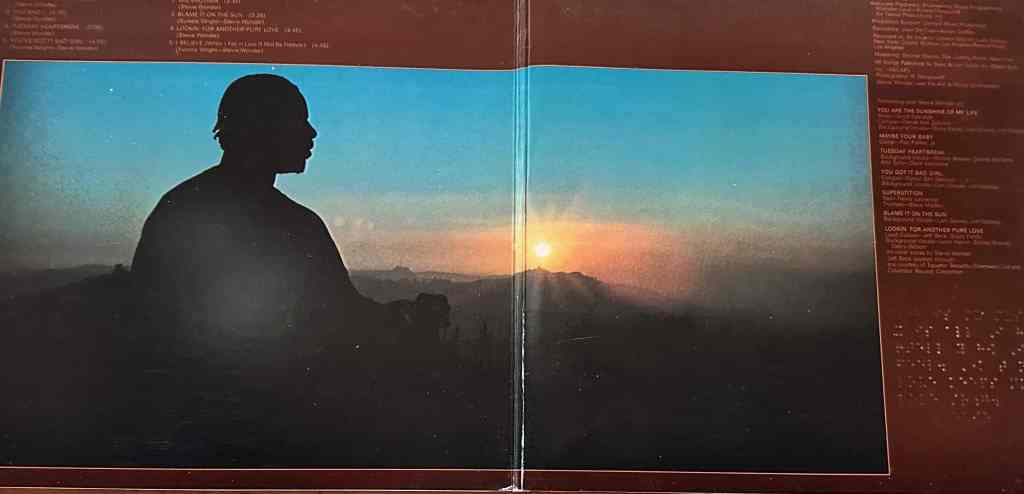

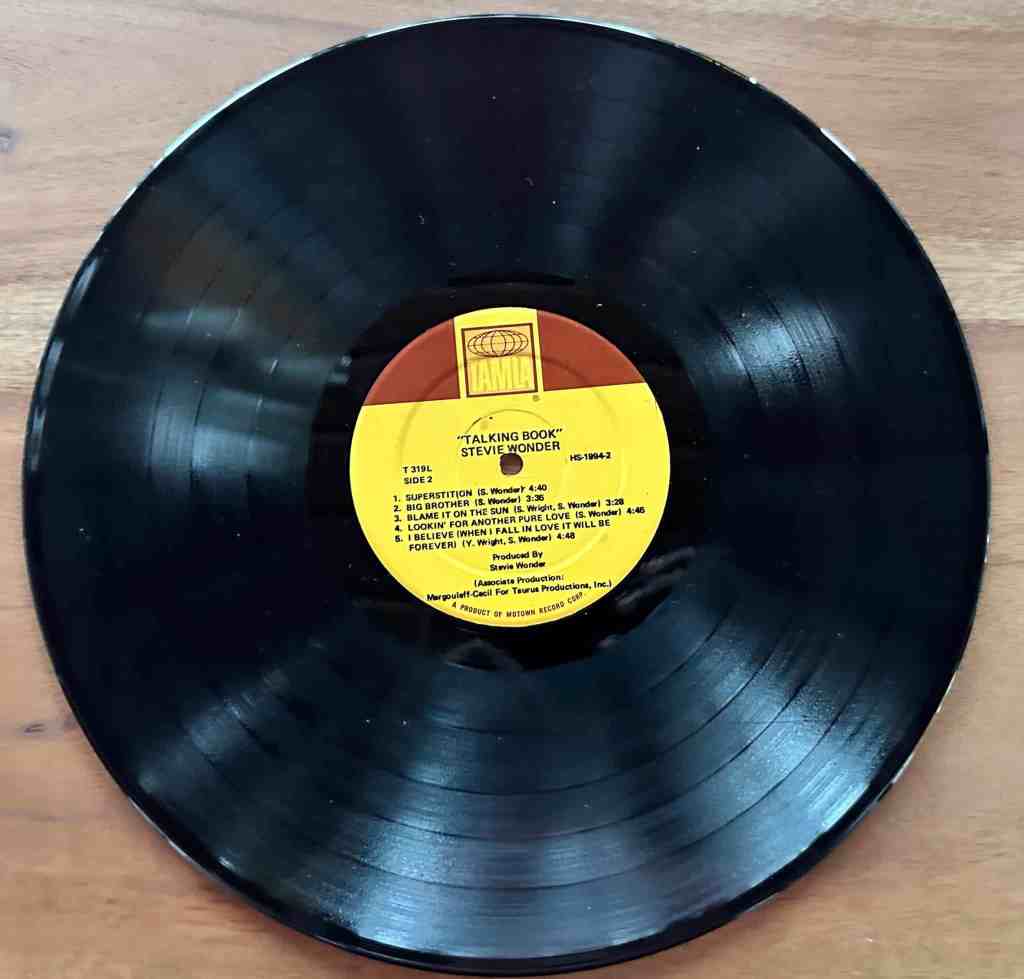
El Groove y el vaso
Entre Talking Book y una copa de Albariño se establece una conversación natural que se revela en cuanto ambos cobran vida. Los surcos son profundos, pero nunca apresurados, y el vino sigue su ejemplo: lo suficientemente vivo como para mantenerse despierto, lo suficientemente relajado como para perdurar. Uno tampoco se apresura. Se saborea entre frases, no sobre ellas, dejando que el ritmo marque el paso, y no al revés.
El funk aquí es controlado, seguro de sí mismo y elástico. Las líneas de bajo se alargan, los sintetizadores se deslizan y la copa se convierte en parte del movimiento: levantar, beber un sorbo, posar, repetir. El vino no interrumpe el ritmo; lo reinicia, manteniendo la experiencia ágil y ligera mientras el disco se encarga del trabajo pesado. Esta es una experiencia auditiva que se vive tanto con el cuerpo como con los oídos.
Para cuando termina la canción, la conexión resulta evidente. El disco se mueve, el vino refresca y la sala encuentra su ritmo en algún punto intermedio. Ese es el objetivo de este maridaje: no analizarlo hasta la saciedad, sino dejar que el ritmo y la copa sigan el compás el tiempo suficiente para que el tiempo se nos escape.
Charles’ Pour Notes
Vino: Licia Albariño, Rías Baixas, España
Perfil: Brillante y limpio en el primer sorbo, con notas de cáscara de cítricos, manzana verde y un ligero toque salino que le aporta ligereza. Sin roble, sin pesadez, solo una acidez fresca y la textura suficiente para mantener el interés a medida que la copa se calienta. Es refrescante sin ser ácido, expresivo sin llamar la atención.
Maridaje: Desenfadado pero intencionado. Es un vino para dejar que su lado más completo se exprese, sin prisas, sin darle demasiadas vueltas. Se disfruta mejor con las luces tenues, la habitación en silencio y el volumen lo suficientemente alto como para sentir cómo se asientan las líneas de bajo. Un vino que se mantiene presente mientras la música lleva la voz cantante.

Una Final Note
«Talking Book» es el tipo de disco que no pide que lo redescubran, sino que simplemente espera a que lo compartan. Dale tiempo, ponlo a un volumen adecuado, y seguirá sabiendo exactamente cómo acompañarte en cada momento.
Ese mismo espíritu de paciencia y cercanía se refleja en nuestra reflexión sobre Luther Vandross, otro artista que comprendió que la música soul te llega justo donde estás.