

Santana Abraxas Vinyl Review: Why This 1970 Classic Still Moves
Santana’s Abraxas blends rock, Latin rhythm, and soul into a sound that still moves today.
Wine Score: ★★★★☆ (4/5)
Album Score: ★★★★★ (5/5)
Scores reflect my personal experience — less about perfection, more about vibe.
Some albums begin with a moment. Abraxas begins with movement.
From the first note, there’s no slow build, no polite introduction, just rhythm, heat, and a kind of spiritual urgency that pulls you into its orbit immediately.
The first time I dropped the needle on this one, it didn’t feel like discovering something new, it felt like stepping into something that had already been happening for years without me. That’s the magic of Santana here. This isn’t just rock. It’s Latin rhythm, blues, and Afro-Cuban influence woven into something looser, more fluid music that moves like conversation, like dance, like memory.
And on vinyl, that movement matters.
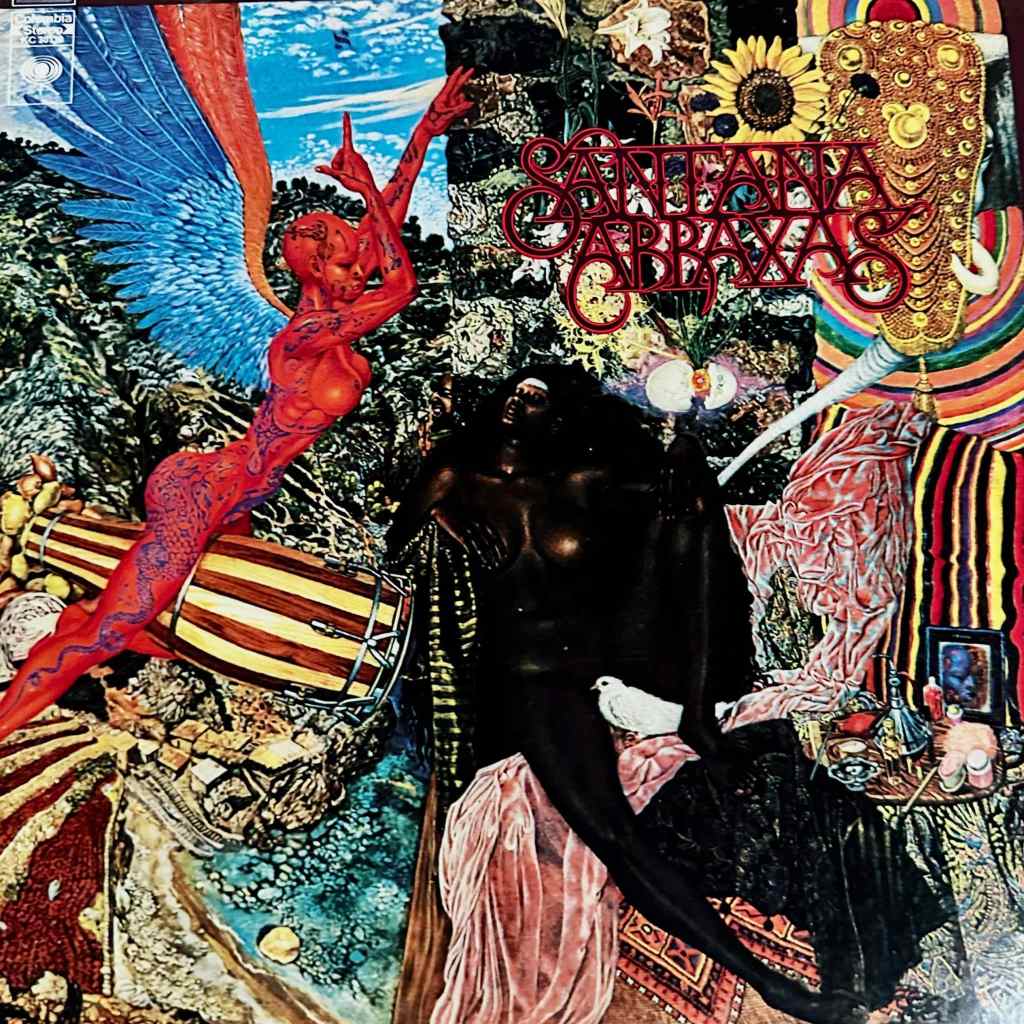
The artwork pulls you in the same way, just without sound. That cover, bold, chaotic, almost mythic, never really explains itself. It’s something you sit with, turning it slightly in your hands, trying to make sense of the shapes, the figures, the feeling it gives off. The sleeve doesn’t simplify it either. If anything, it leans further into that sense of mystery. And over time, you stop trying to decode it and just let it exist alongside the music, another layer of the experience, just as expressive and just as open-ended.
The Listening Ritual
Before the needle drops, set the tone. Whether you’re revisiting this album or hearing it for the first time, here’s how to experience it fully.
🎧 Start the Record
Stream the album on your preferred platform and settle into the mood before the first side begins.
🍷 Pour the Pairing
Bring the full experience together with a bottle that complements the character of the record.
Availability may vary by location.
🎵 Own the Record
For readers who want the full analog experience, here’s where to track down the album on vinyl.

The Santana Sound
There’s a distinct language to Santana’s music, one that doesn’t rely on any single instrument to carry it. The guitar is the voice you recognize first. Carlos Santana’s tone is smooth but piercing, melodic without ever feeling soft. It doesn’t rush. It lingers just long enough to pull everything else forward. But it’s the rhythm section that gives Abraxas its identity.
The percussion, congas, timbales, drums, does more than keep time. It drives the entire record. There’s a constant pulse underneath every track, something you feel as much as you hear. It’s where that Afro-Cuban influence lives most clearly, grounding the album even as everything else moves around it.
Then there are the keys and organ, sitting just beneath the surface. Never overpowering, but always present, filling space, adding warmth, giving the grooves somewhere to settle. And together, it all blends into something that doesn’t feel layered so much as interconnected. Nothing stands alone for long. The guitar leans into the rhythm. The rhythm lifts the melody. The whole thing moves as one.
On vinyl, that cohesion becomes even more noticeable. Each element has space, but never distance. It’s not about separation, it’s about how everything stays in motion together.

Side A / Side B Breakdown
Side A: Rhythm First, Everything Else Follows
There’s a seamlessness to how it unfolds, starting with “Singing Winds, Crying Beasts” and slipping almost immediately into “Black Magic Woman / Gypsy Queen.” It doesn’t feel like a transition as much as a continuation, like the album was already in progress before you arrived.
The groove sits front and center here. Percussion leads, the organ fills the space beneath it, and Santana’s guitar threads its way through without ever overpowering the rhythm. Everything feels connected—less like individual parts and more like a single, continuous motion.
“Oye Como Va” anchors the side with something more familiar, but even here, it never feels static. It’s loose, confident, and completely unforced.
⸻
Featured Track: “Black Magic Woman / Gypsy Queen”
This is where everything clicks into place.
The opening is restrained, almost patient, before the rhythm builds underneath it. By the time it shifts into “Gypsy Queen,” the track opens up completely, faster, looser, more expressive.
It’s a perfect example of how Abraxas works: nothing is rushed, but nothing stands still.
Side B: Space, Texture, and Release
If Side A is about movement, Side B is about what happens when that movement settles, just enough to let the emotion come forward.
“Samba Pa Ti” is the centerpiece. Slower, more deliberate, and more exposed. Santana’s guitar steps forward here, not to dominate, but to speak more clearly. There’s a warmth to it that feels almost conversational.
The rest of the side leans into atmosphere. The grooves are still there, but they stretch out more, giving each instrument a little more room to breathe.
It’s not a cooldown, it’s a shift.
Featured Track: “Samba Pa Ti”
This is the moment where the album stops moving outward and turns inward.
There’s no urgency here, just tone, phrasing, and space. It’s the kind of track that changes depending on when you play it. Late evening, low light, glass in hand, it lands differently.
What to Expect to Pay
Abraxas is one of those records that shows up often, but not always in the condition you’d want to bring home.
Because it sold well and has been reissued multiple times, you’ll find copies across a wide range of price points. The difference almost always comes down to condition and pressing quality, not availability.
- Modern reissues (clean, easy to find): $20–$30
- Early U.S. pressings (VG to VG+): $30–$75
- Strong VG+ to NM copies (early pressings): $75–$125
- Audiophile or specialty reissues: $35–$60
If you’re crate digging, this is one you’ll see regularly, but it’s also one where surface noise matters. Side B, especially “Samba Pa Ti,” will expose every imperfection in the vinyl.
If you come across a clean early pressing, it’s worth the extra few dollars. This is an album that benefits from quiet playback and a little bit of space.


The Groove and the Glass
There’s a natural rhythm to Abraxas, not just in the music, but in how it unfolds over time. The kind of record that doesn’t ask for attention so much as it rewards it.
The pairing should do the same.and presence over flash.
How to Pair It
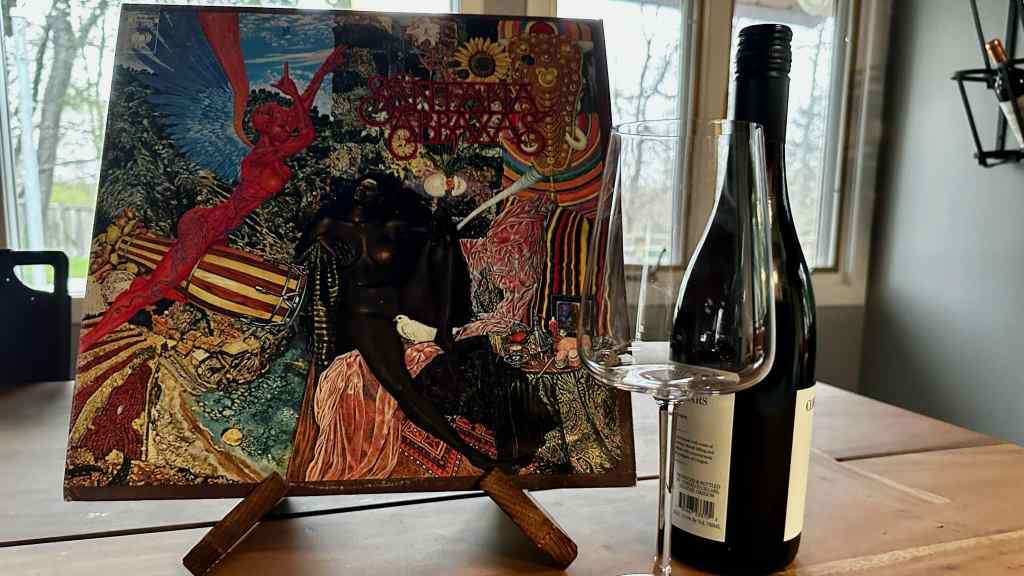
Start the pour just before the needle drops on “Singing Winds, Crying Beasts.” Let the first sip land as “Black Magic Woman” begins to take shape, you’ll notice how naturally the wine follows the rhythm rather than competing with it.
As Side A unfolds, the pairing settles into something fluid and unforced. The percussion leads, the guitar weaves through it, and the wine opens alongside it, bright, expressive, and just a little ahead of where you expect it to be.
By the time “Oye Como Va” comes around, everything is in sync. The groove, the glass, the room, it all feels connected without needing your attention.
Flip the record, give the glass a moment, and let “Samba Pa Ti” carry the rest. This is where both the wine and the music soften slightly, opening up into something more reflective, more personal.
No rush. Just let it move.
Pouring Directions
- Slightly below room temperature (about 60–65°F)
- Standard red wine glass, nothing oversized
- Let it breathe for 10–15 minutes before the first pour
- Keep the pour modest, you’ll find yourself coming back to it
Why This Pairing Works
Both the wine and the album are built on movement, they don’t sit still, and they don’t ask you to either.
The Garnacha brings lift, spice, and just enough structure to stay aligned with the rhythm without weighing it down. Abraxas does the same. It layers percussion, guitar, and melody in a way that keeps everything in motion without ever feeling crowded.
Neither one tries to dominate the experience. Instead, they evolve together, opening gradually, shifting in tone, and settling into something that feels natural rather than constructed.
Together, they create a listening session that feels fluid, expressive, and easy to return to.
Charles’ Pour Notes
Wine: Sierra de Tolono Rioja La Dula Garnacha de Altura, 2023
Profile: Bright red fruit, white pepper, subtle earth, lifted acidity
Pairing Mood: Rhythmic, expressive, and constantly in motion
There’s a natural lift to this wine that mirrors the way Abraxas moves. It doesn’t linger too long in any one place, it shifts, opens, and evolves, staying just ahead of expectation.
Where a heavier red might slow the experience down, this keeps everything in motion, right where the album lives.
A Final Note
Some albums are easy to admire. Others are easier to live with.
Abraxas falls into that second category.
It’s not about precision or perfection, it’s about feel. About rhythm. About letting something play all the way through and realizing, somewhere along the way, that you’ve stopped paying attention to individual tracks and started experiencing the record as a whole.
That’s where it stays with you.
On vinyl, that feeling only deepens. The space between tracks matters. The way Side A gives way to Side B matters. It’s not just a collection of songs, it’s a continuous movement that asks you to stay with it just a little longer. And paired with the right glass, something with lift, a little edge, and room to open, it becomes something more than a listen.
It becomes a moment you return to.
If this kind of listening experience resonates, you might also find yourself returning to Rumours for its layered, immersive flow, or Getz/Gilberto for something equally fluid, but more understated.