

Getz / Gilberto Review: A Quiet Jazz Classic That Still Rewards Vinyl Listening
Stan Getz and João Gilberto’s timeless bossa nova session, best experienced the way it was meant to be heard: slowly, on vinyl.
Wine Score: ★★★★☆ (4/5)
Album Score: ★★★★½ (4.5/5)
Scores reflect my personal experience — less about perfection, more about vibe.
There’s no hurry anywhere on Getz / Gilberto.
João Gilberto’s guitar barely disturbs the air. Stan Getz’s saxophone glides instead of pushes. Even the vocals feel as if they’ve been invited into the room rather than placed at the center of it. Getz / Gilberto, released in 1964, is one of those rare albums that changes the atmosphere the moment the stylus settles into the groove. The room softens. Conversations slow. The edges of the day dissolve a little.
It’s not dramatic music. It doesn’t ask for attention in the way a big band record or a rock album might. Instead, it invites you to lean in.
That quiet confidence is exactly what makes this album endure.
The Listening Ritual
Before the needle drops, set the tone. Whether you’re revisiting this album or hearing it for the first time, here’s how to experience it fully.
🎧 Start the Record
Stream the album on your preferred platform and settle into the mood before the first side begins.
🍷 Pour the Pairing
Bring the full experience together with a bottle that complements the character of the record.
Availability may vary by location.
🎵 Own the Record
For readers who want the full analog experience, here’s where to track down the album on vinyl.

The Record
Stan Getz and João Gilberto didn’t invent bossa nova, but this album helped introduce it to a much wider audience. The style had already been growing in Brazil, built on gentle rhythms and understated vocals.
Getz / Gilberto became the record that carried that sound beyond its home country. For many listeners, it was their first real introduction to bossa nova, relaxed, rhythmic, and unlike much of what was on the radio at the time.
Everything here is understated.
Gilberto’s guitar barely disturbs the air. His vocals arrive almost conversationally. Getz answers with a saxophone tone that feels warm and relaxed rather than showy. Instead of competing for space, the musicians leave room for each other.
That space is the secret.
Listen closely and you notice how much restraint defines the performance
The Voice That Changed the Record
One of the most recognizable moments on the album arrives with “The Girl From Ipanema.”
Astrud Gilberto’s vocal wasn’t originally meant to define the song, yet her soft, almost tentative delivery became the emotional center of the recording. There’s something refreshingly natural about it. Nothing over-rehearsed. Nothing over-sung.
On vinyl especially, her voice sits lightly between the speakers while Stan Getz’s saxophone moves around it with an easy, unhurried tone.
For many listeners, this album begins and ends with “The Girl From Ipanema.” While the song has appeared on countless compilations over the decades, hearing it within the context of the original Getz / Gilberto album is a different experience. The relaxed pacing of the record, the gentle rhythm section, and Astrud Gilberto’s delivery make more sense when the song sits naturally among the surrounding tracks rather than standing alone.
While Ipanema often gets the spotlight, it isn’t the only moment where her presence shapes the record. “Corcovado (Quiet Nights of Quiet Stars)” offers another standout performance, softer and even more intimate, where the gentle rhythm and Astrud’s understated vocal feel perfectly at home in the album’s relaxed atmosphere.
Both songs reveal the same idea that runs through the entire record: sometimes the quietest voice in the room is the one that stays with you the longest.
Listening on Vinyl
This is an album that rewards a calm listening environment.
The dynamics are subtle, and the production leans toward clarity rather than volume. On a well-set-up turntable, João Gilberto’s guitar rhythm sits lightly in the background while Stan Getz’s saxophone moves forward with a smooth, rounded tone.
There’s a tactile quality to the recording that digital versions sometimes flatten. The room tone, the breath inside the saxophone, the gentle percussion all of it becomes more dimensional when played from a clean pressing.
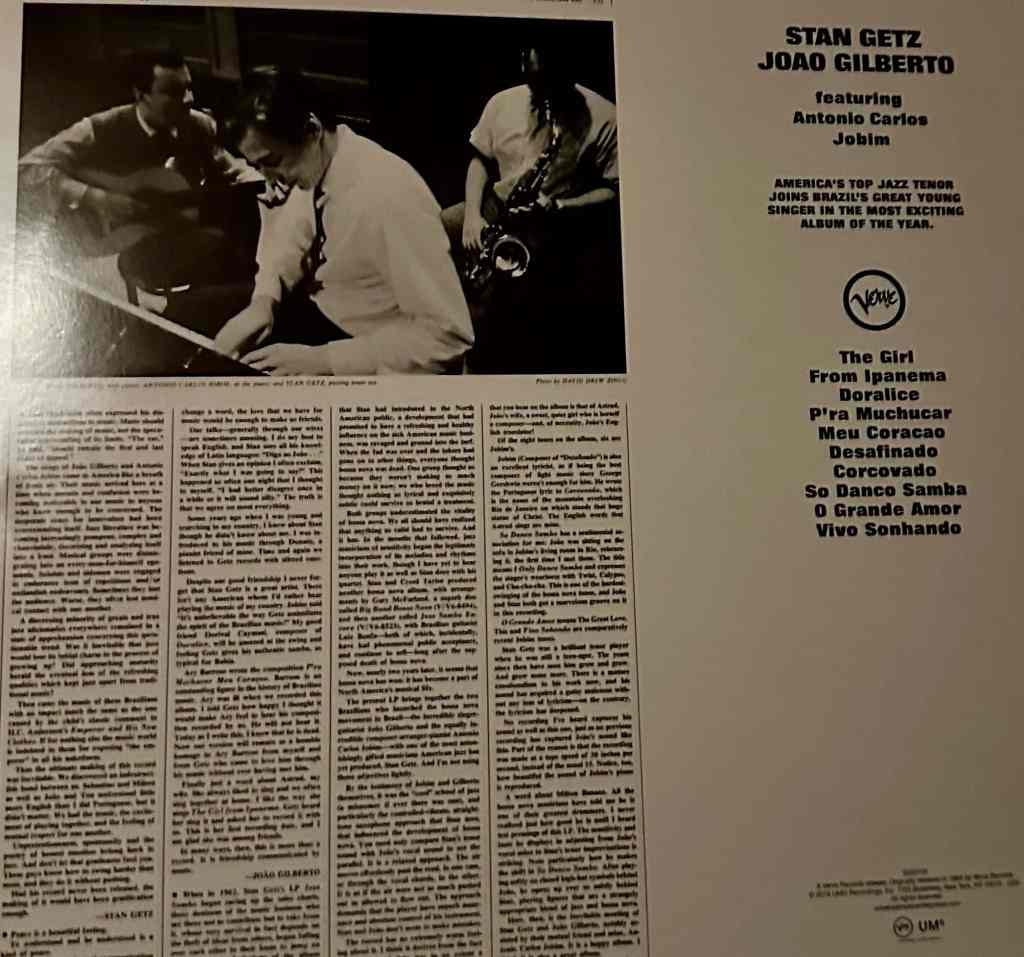
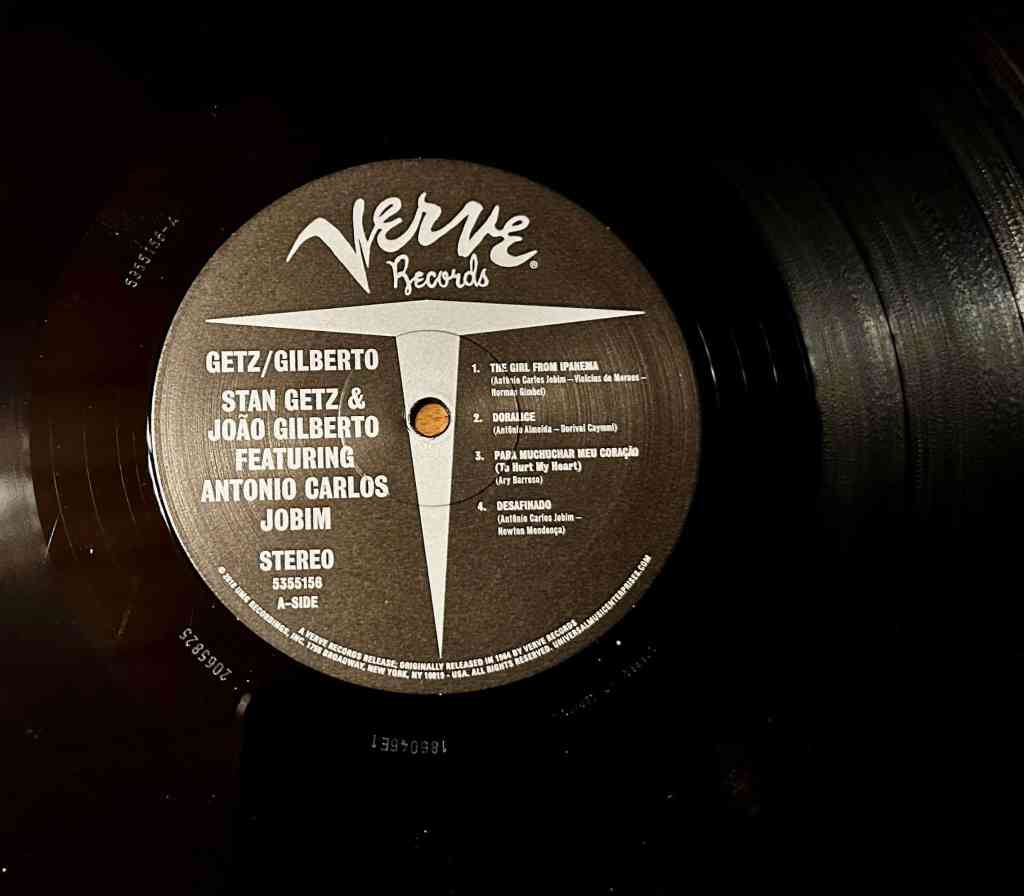
I should mention that the copy in my collection isn’t an original. I searched for one for years before eventually accepting that early pressings of this album aren’t as easy to stumble across as you might expect. At some point practicality won out and I picked up a modern reissue instead.
Sonically, I’m not convinced I’m missing much. On my current audio chain the record sounds rich, spacious, and far more engaging than the digital versions I’ve heard over the years. Still, part of the collector’s instinct remains. Originals have a certain gravity, and I suspect that someday I’ll replace this copy if the right pressing crosses my path.
Until then, this one does exactly what it should.
It’s the kind of record that reminds you why the ritual of vinyl listening still matters.
Lower the lights. Pour a glass. Let the side unfold.
What to Expect to Pay
Getz / Gilberto is one of those albums that exists in countless pressings, which means the price range can vary quite a bit depending on what version you’re hunting.
Modern reissues are the easiest entry point. Many are well mastered and widely available, typically landing between $20 and $35 depending on the label and pressing plant. I recently picked up a clean reprint for $27, and from a purely listening standpoint it delivers exactly what you’d want from this record.
For collectors, however, the conversation quickly turns to early Verve pressings. Original 1964 releases, especially those with the Verve “black label” design and matching matrix numbers in the deadwax, tend to command a much higher price.
Expect roughly:
- $25–$35 Modern reissues (common and easy to find)
- $60–$120 Early U.S. pressings in solid VG+ condition
- $150+ Clean originals or desirable early stampers
Part of the challenge is that this album has been pressed repeatedly for decades, often with subtle variations in labels, stampers, and deadwax inscriptions. If you’re chasing a first pressing, checking the matrix numbers etched in the runout groove is the safest way to confirm what you’re holding.
That said, this is a record where the music matters more than the pedigree. Even a modest reissue can capture the relaxed tone and spacious production that make the album special.
And if an original eventually crosses your path?
Well, that’s part of the hunt.

The Groove and the Glass
The relaxed elegance of Getz / Gilberto calls for something equally effortless in the glass.
For this listening session, Château d’Esclans Whispering Angel Rosé from Provence feels like a natural companion. Light, crisp, and quietly expressive, it carries soft notes of strawberry and citrus with a clean, refreshing finish.
It’s the kind of wine that doesn’t demand attention, which makes it perfect for an album built on restraint. Much like João Gilberto’s gentle guitar rhythm and Stan Getz’s smooth tenor lines, Whispering Angel keeps things balanced and easygoing.
A chilled glass alongside this record turns the listening session into something closer to a moment, the needle settling into the groove, the rhythm unfolding, the room relaxing a little.
Serve it cool, pour a glass before the first track, and let the side play through without rushing.
Some pairings are about contrast.
This one is simply about atmosphere.
Keep it simple.
- Chill it: Cold, but not ice cold.
- Use a regular white wine glass: Nothing oversized.
- Pour a modest glass: Enough to enjoy, not overthink.
- Skip the decanter: Whispering Angel is meant to be poured and enjoyed.
- Open and enjoy: Rosé like this pairs best with an easy listening session.
Lower the lights. Start the record.
Some albums call for something bold or contemplative. Getz / Gilberto asks for something lighter, relaxed enough to let the evening unfold.
Charles’ Pour Notes
Wine: Château d’Esclans Whispering Angel Rosé (Côtes de Provence)
Profile: Light-bodied. Fresh strawberry and citrus up front. Clean acidity. Dry finish. Nothing heavy, nothing sweet, nothing overworked. It shows up, does its job well, and doesn’t linger longer than it needs to.
Pairing Mood: Early evening. Windows open. Volume slightly up.
Not a record you dissect, one you let run while the conversation moves around it. The kind of album that feels better once the second glass is poured and the room relaxes into it.

A Final Note
Getz / Gilberto may not be the loudest record in the collection, but that’s never been the point.
It’s patient. It’s balanced. It lets the small moments do the work.
Not every album needs to command the room. Some simply change the atmosphere, easing the pace and softening the edges of the evening.
Quiet rhythm. Easy pour. Let the side play through.
If you enjoy records that unfold at their own pace, you might also appreciate our listening session with Isaac Hayes’ Hot Buttered Soul , another album that rewards patience and a good turntable.