
How to Organize Vinyl Records and Catalog Your Collection
Every record collection reaches a moment where enthusiasm outpaces organization. What begins as a few carefully chosen albums slowly turns into leaning stacks, crowded shelves, and crates that require two hands and a little faith. The collection is alive and growing, but finding what you want to hear has started to feel harder than it should.
That’s usually the point when organization enters the conversation. Not because anything is broken, but because the collection has matured. The question is no longer what should I buy next, but how do I live with what I already have? And while there’s no shortage of advice on how records should be organized, much of it ignores how people actually listen.
Before worrying about spreadsheets, cataloging apps, or pressing details, the physical arrangement has to make sense. The shelf is where listening begins, and if it creates friction, the joy slips away quietly. The goal isn’t precision or perfection, it’s ease. A good system should feel invisible once it’s in place.
From Crates to Shelves: A Personal Reset

When I started collecting vinyl again, it began simply, one crate that slowly grew heavier over time. That simplicity didn’t last long, but it felt familiar in a way that caught me off guard.
In my teens, twenties, and early thirties, vinyl was less about collecting and more about function. I was DJing in nightclubs, working long four- and five-hour sets, hauling crates packed with intent rather than sentiment. Those records were tools. I knew them instinctively, what worked early in the night, what filled the floor, what reset the room when energy dipped. Organization wasn’t optional; it was survival. Records were grouped by energy and flow, not alphabet or genre, and I could reach into a crate without looking and know exactly what I’d pull.
Returning to vinyl years later was a different experience altogether. The urgency was gone. The goal was no longer to guide a room, but to sit with the music. The systems that worked in a club didn’t translate to a shelf at home, and for the first time I found myself unsure how to organize something I once knew intimately. That struggle between instinct and intention is one many collectors face, especially when the context of listening changes.
The First Real Challenge: How to Sort a Collection
Sorting records sounds simple until the collection reaches a certain size. A few dozen albums can survive almost any approach, but once growth accelerates, indecision sets in. Records get moved, then moved again. Categories blur. Organizing becomes a project that never quite feels finished.
The most common mistake is chasing a “correct” system instead of an honest one. The best way to sort a collection is to mirror how you naturally look for music now, not how someone else says it should be done.
There are a handful of common approaches, each with its own strengths:
- Artist A–Z – Ideal if you usually know exactly what you want to play; simple, familiar, and easy to maintain.
- Genre → Artist A–Z – Best for mood-based listening and browsing sessions, especially when listening has a theme or feel.
- Current Rotation + Main Collection – A practical hybrid that keeps new finds and frequently played records accessible without disrupting the core system.
- Chronological (by release year) – Appeals to listeners who enjoy era-based exploration and musical history.
- Label or pressing-focused organization – Best suited for advanced collectors who prioritize production details over casual browsing.
No system is permanent, and none needs to be perfect. What matters is whether it reduces friction between wanting to listen and actually putting a record on.
Genre-based systems, in particular, benefit from restraint. Broad, flexible categories are far more useful than narrow or academic ones. The guiding question isn’t what a record technically is, but where you’d instinctively look for it when the mood strikes. If the answer comes easily, the system is working.
Many collectors eventually settle into a hybrid approach without planning to. A stable main system paired with a small “current rotation” section reflects how records actually move through daily life. New purchases, recently cleaned albums, or favorites in heavy rotation stay visible, while the rest of the collection remains neatly filed.
In the end, the right sorting method is the one that fades into the background. If you’re constantly debating where a record belongs, the structure is too complicated. Start simple, live with it, and allow the collection to guide the next adjustment.
Using Dividers to Make the System Work
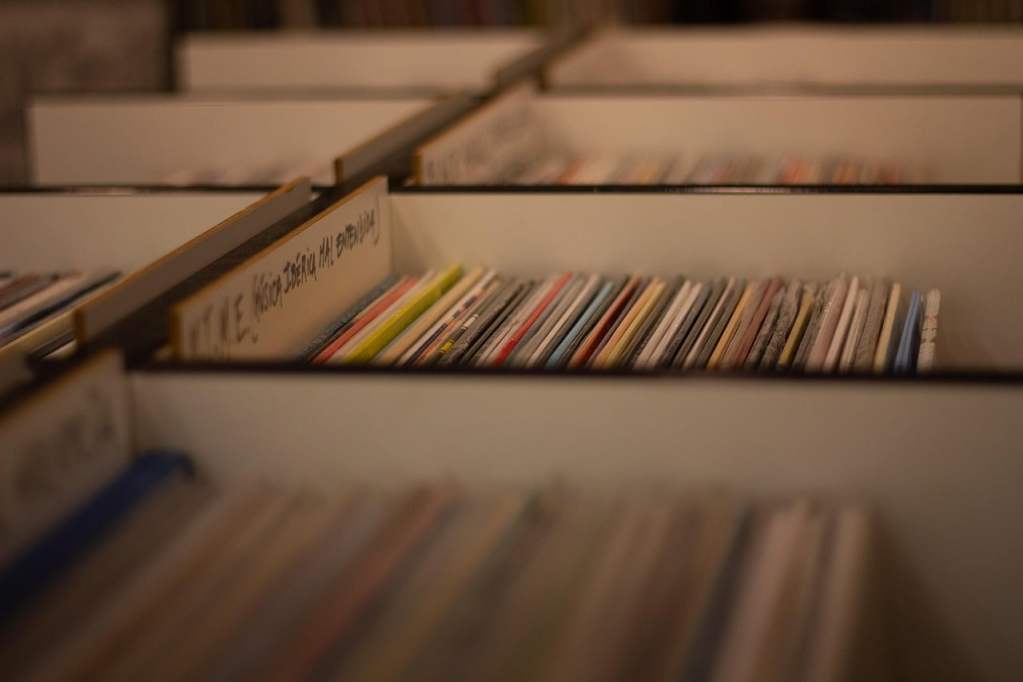
Once you’ve chosen a sorting method, dividers become the quiet workhorses of the collection. They don’t organize records on their own, but they make a system usable, especially as shelves fill in.
I use alphabetical dividers, even when parts of the collection are genre-based. They provide just enough structure to move quickly through a section without interrupting the flow of browsing. When you’re standing in front of the shelf with a record already in mind, dividers turn searching into a short, almost automatic motion rather than a visual scan.
Dividers also enforce consistency. It’s easier to put a record back where it belongs when there’s a physical marker telling you exactly where that spot is. Over time, this prevents drift without requiring constant attention.
Material matters less than clarity. Plastic, acrylic, or heavy card stock all work well, as long as the dividers are sturdy, readable, and tall enough to be seen at a glance. Simple designs tend to age better than decorative ones, especially as collections grow and evolve. For anyone building or rebuilding a collection, dividers are one of the few accessories that deliver immediate, practical value.
This article contains affiliate links. If you choose to buy through them, it helps support Needle & Vine at no extra cost.
Here are a few simple premade divider options we’ve used here at Needle & Vine.
OrigoDeco Vinyl Record Dividers

A clean, readable way to break a collection into A–D, E–H style groupings without overcomplicating the shelf.
Jxueych Vinyl Record Dividers

A straightforward A–Z system, with one divider for each letter.
What to Catalog (and What Actually Matters)
Once the shelves make sense, cataloging feels like the natural next step. With everything finally in order, there’s an urge to capture it—to make sure that clarity doesn’t disappear as the collection grows. This is also where many collectors overreach.
Cataloging isn’t about recording everything a record could be. It’s about capturing what you’ll actually use later. At its core, a catalog should answer one simple question: What do I own? Artist, album title, and format usually provide enough foundation to avoid duplicates and jog memory.
Condition is worth tracking, but only in broad strokes. You don’t need dealer-level grading. Notes about surface noise, warping, or sleeve wear are far more useful than precise labels you won’t remember assigning.
Pressing details can add depth, but they’re optional. If sound quality, historical interest, or value matter to you, include what’s relevant. If not, it’s fine to leave that layer for later.
There’s also value in noting how a record entered your collection. Where you found it, what you paid, or why you brought it home adds context that no database can supply. Over time, those notes become a quiet history of the collection itself.
Just as important is knowing what not to track. Spin counts, exact market values, and overly detailed metadata demand constant upkeep and rarely improve the listening experience. If maintaining the catalog becomes heavier than maintaining the records, it’s doing too much.
Like sorting, cataloging works best when it grows slowly. Start with what you’ll actually reference, and add detail only when a real need appears. The catalog should support listening, not distract from it.
Tools: From Spreadsheets to Discogs
I started the way many people do: with a spreadsheet. For a small collection, it works. You have control over every field and can tailor it exactly to your preferences. But as the collection grew, keeping it updated became more work than listening, and reality started to drift away from what was documented.
Eventually, I moved the catalog to Discogs, and it removed a lot of friction. You can build a private collection that mirrors your physical organization, create folders or categories that match how your shelves are sorted, and capture pressing details without starting from scratch.

One of the biggest advantages is flexibility. Your Discogs catalog can be exported and loaded into Excel or other tools if you want to manipulate the data further—tracking costs, filtering by condition, or experimenting with custom views. It doesn’t lock you in.
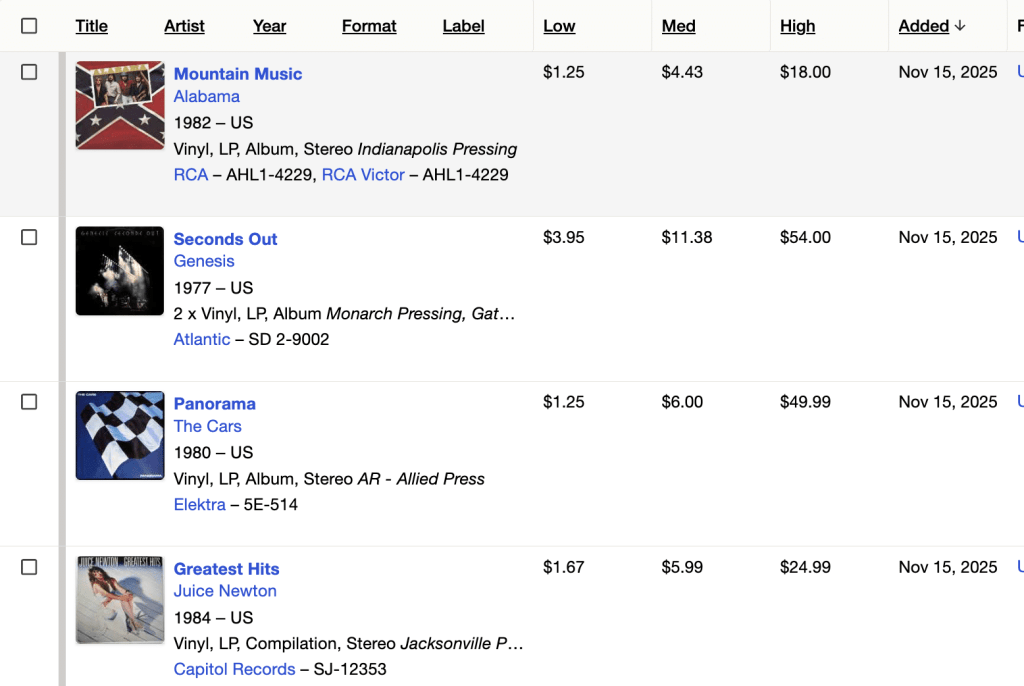
Discogs isn’t perfect, and there’s certainly room for improvement. But in terms of time saved and structure gained, it’s been a meaningful upgrade from maintaining everything by hand.
And this isn’t meant to be definitive. If you’ve found a better method, a smarter tool, or a workflow that scales more cleanly, feel free to reach out and share it. Organizing a collection is an evolving process, and there’s always something to learn from how others do it.
Final Note: Order in Service of Listening
At its best, organizing a record collection isn’t about control or completeness. It’s about removing friction. When the shelves make sense, when records return to their place without thought, the space between wanting to listen and actually listening disappears.
The collection doesn’t need to be perfect. It doesn’t need to follow anyone else’s rules. It only needs to support the way you live with music now. That might mean evolving away from old habits, simplifying systems that no longer fit, or letting go of the idea that organization is ever truly finished.
Sorting, dividers, and cataloging are tools, not goals. They exist to make room for the moments that matter: pulling a record without searching, rediscovering something you forgot you owned, or letting an album play all the way through because nothing pulled you away.
If the system fades into the background and the music takes over, you’ve done it right.
And if you’re still at the beginning of building your listening space, our guide to what to do after buying a turntable walks through the first steps that make the rest of this possible.