
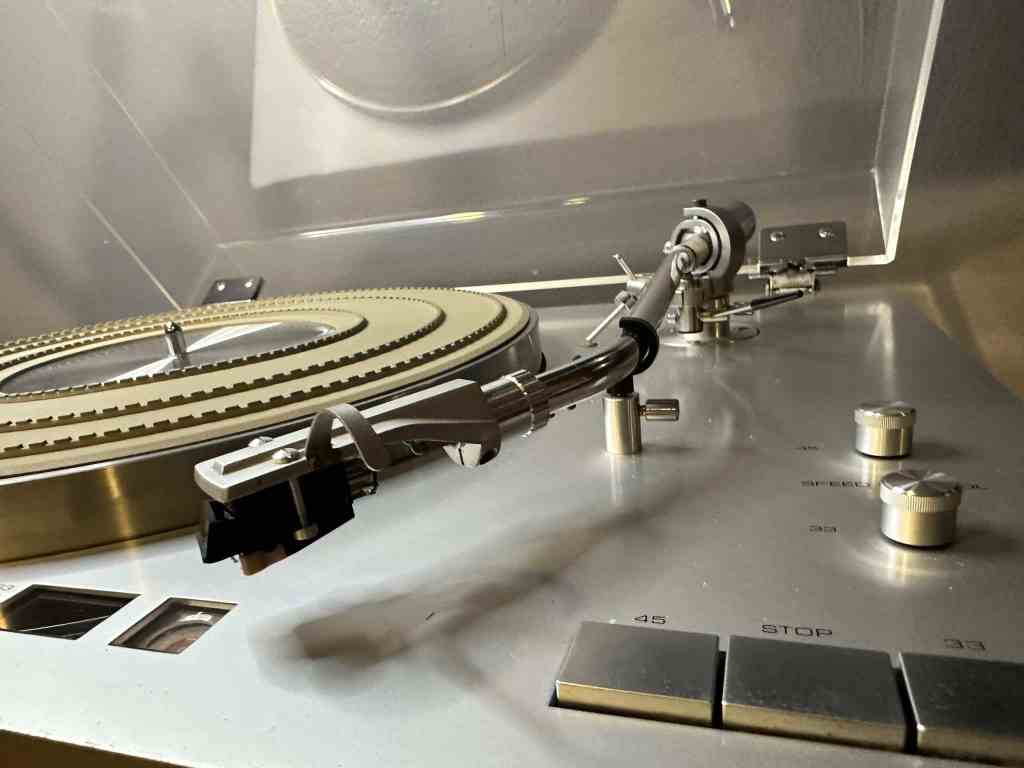
A Table That Doesn’t Rush You: Living With the Yamaha YP-800
Some turntables feel familiar the moment your hands touch them. The Yamaha YP-800 did that for me, not because it looks like something I used to own, but because it behaves like something I trusted for years.
Back in my DJ days, I spent plenty of time behind a Technics SL-1200MK2. Different purpose, different environment, but the same philosophy. Rock-solid speed. Serious mass. A sense that the table was built to do one job extremely well and never complain about it.
The YP-800 carries that same DNA.
Built by Yamaha during a period when hi-fi gear was expected to outlast trends, not chase them, this table feels less like a component and more like a decision. It doesn’t rush you. It assumes you’re listening on purpose.
Affiliate Disclosure: Needle & Vine is supported in part through affiliate partnerships. If you purchase a product or vintage component through links in this article, I may earn a small commission at no additional cost to you. These partnerships help support independent reviews, restorations, and new content.
First Contact: Weight You Can Feel
The first thing you’ll notice when you pick up the YP-800 is simple:
This thing is heavy.
Not awkward heavy, reassuring heavy. The kind of weight that tells you materials mattered and shortcuts weren’t taken. Before it ever spins a record, it establishes authority just by existing on the shelf.
That weight lives primarily in the plinth, the solid base of the turntable that supports the motor, platter, and tonearm. Its job is simple but critical: absorb vibration, resist resonance, and give everything above it a stable foundation. On the YP-800, that foundation feels unapologetically serious.
The platter comes up to speed calmly. Nothing rattles. Nothing flexes. Even before a record touches the mat, you get the sense that this table was designed by people who assumed you were paying attention.

Vintage Marketplace
Looking for a Yamaha YP-800?
The Yamaha YP-800 is long out of production, so availability depends on the used market. eBay is often one of the better places to find current listings.
View on eBayAffiliate link. Price and availability may change.
Familiar Stability (A Nod to the Booth)
What really pulled me in was the stability.
If you’ve ever worked behind a Technics SL-1200MK2, you know the feeling, pitch that doesn’t wander, torque that doesn’t hesitate, and a platter that stays exactly where you expect it to be. The YP-800 delivers that same calm confidence, just aimed at listening instead of performance.
Once the stylus hits the groove, the table disappears. No audible motor noise. No speed drift. No correction happening behind the scenes.
It simply lets the record speak.
Spending time with the YP-800, it becomes clear that it wasn’t built in isolation, philosophically or historically.
Its closest relatives aren’t modern lifestyle decks or lightweight belt-drives. The YP-800 belongs to a small group of vintage machines that prioritized mass, speed stability, and mechanical integrity above everything else.
The Alternatives:
- Technics SP-10, broadcast quality, trusted in professional environments where failure wasn’t an option.
- Thorens TD-124, the authoritative long revered for its drive and presence.
- Garrard 301, legendary & known for torque, momentum, and unmistakable character.
- Luxman PD-444, another amazing heavy duty, dual arm, direct drive turntable.
The YP-800 sits comfortably among these names. It doesn’t announce its pedigree, but you feel it in the weight, hear it in the pitch stability, and notice it most in what isn’t there: noise, drift, distraction.
That’s rare company to keep.
Getting One Isn’t Easy (And That’s Part of the Story)
If you’re thinking about adding a YP-800 to your system, it’s worth knowing upfront: these aren’t easy to find, especially in the U.S.
They were never common here, and most of the well-preserved examples live overseas. Mine came from Japan, which meant committing to the purchase without seeing it in person, navigating international shipping, and waiting several weeks for it to arrive.
That wait becomes part of the experience. There’s something fitting about a table like this not showing up overnight in a box truck. It arrives slowly, deliberately — the same way it expects you to listen.
When it finally lands and you lift it out of the packaging, the effort suddenly makes sense.
Design, Mechanics, and Quiet Beauty
Visually, the YP-800 is everything I love about late-70s industrial design.
The plinth is finished in wood veneer, warm and restrained, grounding the table visually as much as mechanically. Above it sits a brushed silver top plate, clean and purposeful, with just enough contrast to feel intentional rather than decorative.
The platter is solid metal, substantial in both weight and appearance. It looks like it belongs there, not oversized, not showy, just correct.
Controls are entirely physical:
- Real metal knobs
- Positive, tactile buttons
- No soft-touch surfaces, no hidden menus
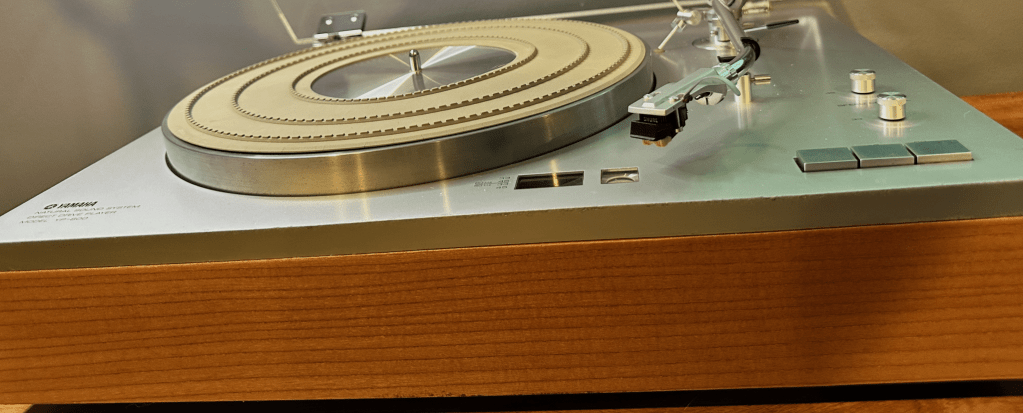
Everything you interact with feels mechanical in the best sense, like it’s responding directly to your hand rather than interpreting it.
One of the more understated details is the strobe-based speed indicator. A small light illuminates markings on the platter, giving you a visual confirmation that speed is locked in. No screens, no readouts, just physics and light doing their job. It’s subtle, functional, and deeply satisfying once you notice it.
There’s a quiet confidence in that approach. Nothing here is decorative for its own sake. Every element exists because it serves a purpose.
The Original Slipmat: When Vintage Shows Its Age
There’s something charming about keeping a turntable as original as possible.
But at some point, practicality wins.
On a deck that’s pushing several decades old, the original rubber slipmat often tells the story of time more clearly than anything else. The edges begin to crack. The rubber dries and hardens. In some cases, the small metal disc embedded in the center can loosen and separate from the housing altogether.
That’s not a criticism, it’s simply age doing what age does.
Rather than leave it in place and let it continue to deteriorate, this is one area where a thoughtful update makes sense. A modern slipmat can improve grip, reduce static, and provide a cleaner interface between record and platter all without altering the character of the table itself.
If you’re unsure what direction to go, I’ve put together a full guide on choosing the right material and style here:
One important note: keep the original slipmat safely stored. If you ever decide to part with this beauty down the road, that originality will matter. For the next owner, having the factory mat included isn’t just nostalgic it’s part of the story.
Sometimes preserving vintage gear means knowing when to replace the small things and knowing when to keep them.
Grounding the Table: Isolation Done Right
One practical upgrade I made was replacing the original Yamaha feet with Luxman Turntable Isolation Feet.
Turntable feet rarely get attention, but their role is essential. Their purpose is isolation, decoupling the turntable from vibrations coming up through the rack, shelf, or floor. Footfalls, low-frequency energy, and room vibration can all travel back into the stylus if you let them.
The Luxman feet add improved damping and mechanical separation, tightening the presentation just a bit more. It’s not a flashy upgrade, but it fits the YP-800’s personality perfectly: quiet, functional, and effective.
Cartridge Pairing: Shure M75EM II
The table is currently paired with a Shure M75EM II cartridge, another piece of vintage gear that knows exactly what it’s about.
The M75EM II is smooth, forgiving, and musically honest. It doesn’t chase exaggerated detail or overly sharp highs. Instead, it favors balance: full mids, controlled bass, and a top end that stays listenable even on less-than-perfect pressings.
On the YP-800, it feels like a natural match. The table’s stability gives the cartridge room to breathe, producing a sound that invites long listening sessions, the kind where you stop thinking about the setup and start flipping records.
Why This Table Belongs Here
There’s no auto-return. No shortcuts. No push-button convenience.
You lift the record. You clean the side. You lower the arm. When it’s done, you bring it back.
That friction matters. Much like the Technics decks I trusted in the booth, the YP-800 demands intention. It doesn’t rush you or fill silence. It rewards presence.
Final Pour
The Yamaha YP-800 isn’t chasing nostalgia, it’s standing on experience.
It shares more than a little philosophy with some of the most respected turntables ever built: mass over marketing, stability over spectacle, and engineering that assumes the listener cares.
Imported patiently, grounded properly, and paired thoughtfully, it becomes exactly what I want at Needle & Vine, a turntable that respects the record, the room, and the moment.
Not background music.
Not convenience listening.
Just vinyl, played the way it was meant to be.
For a look at how that philosophy translates into a modern, streaming-ready design, see our review of the Victrola Stream Onyx and for a deeper dive into bringing analog into a connected system, explore how the Sonos Port vinyl with whole-home listening.
Table of Contents
- Visual Listening Session
- First Contact: Weight You Can Feel
- Familiar Stability
- Getting One Isn’t Easy
- Design, Mechanics, and Quiet Beauty
- The Original Slipmat
- Grounding the Table: Isolation Done Right
- Cartridge Pairing: Shure M75EM II
- Why This Table Belongs Her
- Final Pour
What to Look For When Buying a Yamaha YP-800
Finding a YP-800 is only half the battle. Finding a good one takes a little patience and knowing where to look.
Start with the fundamentals
- Plinth condition: Check for swelling, deep scratches, or veneer separation. Minor cosmetic wear is normal; structural issues are not.
- Platter health: It should be flat, heavy, and free of warping. Any wobble is a red flag.
- Bearing smoothness: The platter should spin freely and quietly by hand with no grinding or resistance.
Motor & speed stability
- Verify that the table holds speed consistently at both 33⅓ and 45.
- The strobe markings should appear steady once locked, drifting or pulsing suggests service is needed.
Tonearm checks
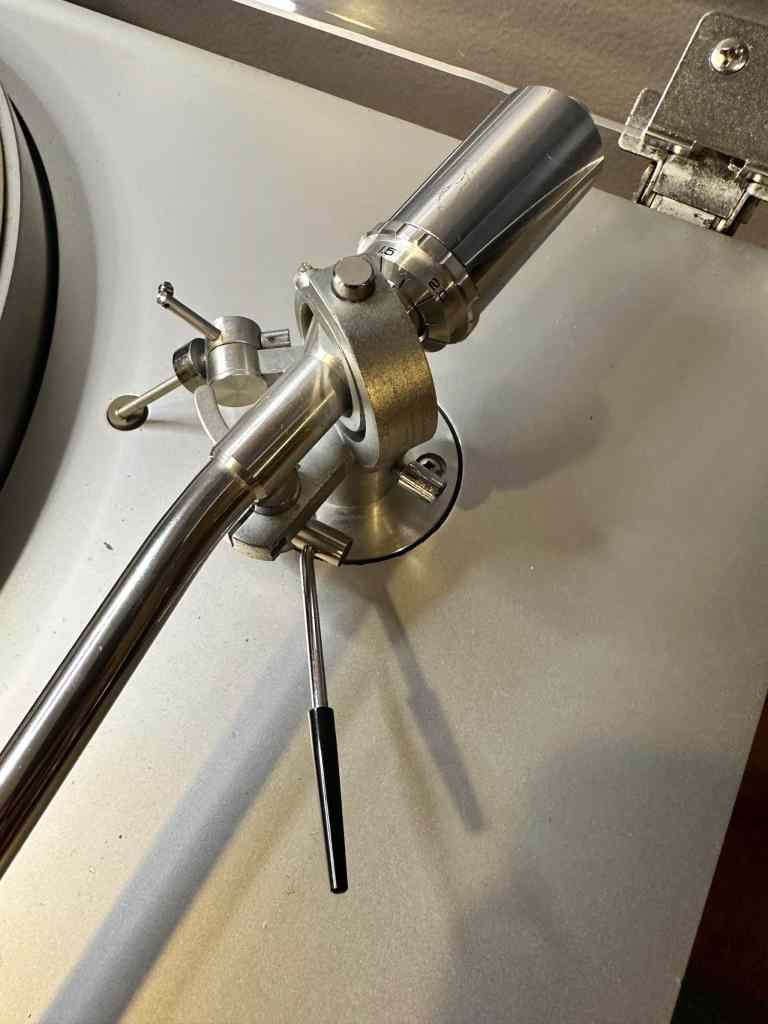
- Make sure the arm bearings feel smooth and unforced in both directions.
- Cueing should lower the arm gently, not drop it.
- Anti-skate and tracking adjustments should move cleanly and predictably.
Feet & isolation
- Original feet are fine if intact, but many have hardened or degraded with age.
- Upgraded isolation feet (like the Luxman replacements used here) can be a worthwhile improvement, especially on suspended floors.
Shipping reality (especially from Japan)
- Confirm the platter and counterweight are removed and packed separately.
- Double-boxing isn’t optional, it’s mandatory.
- Expect a wait. Several weeks is normal, and honestly, appropriate for a table like this.
The good news
Even if a YP-800 needs light servicing, the underlying engineering is strong. These tables were built to be maintained, not discarded. A well-cared-for example will reward the effort many times over.