
What to Do After Buying a Turntable: Beginner’s Guide to Setup, Cleaning & Vinyl Care
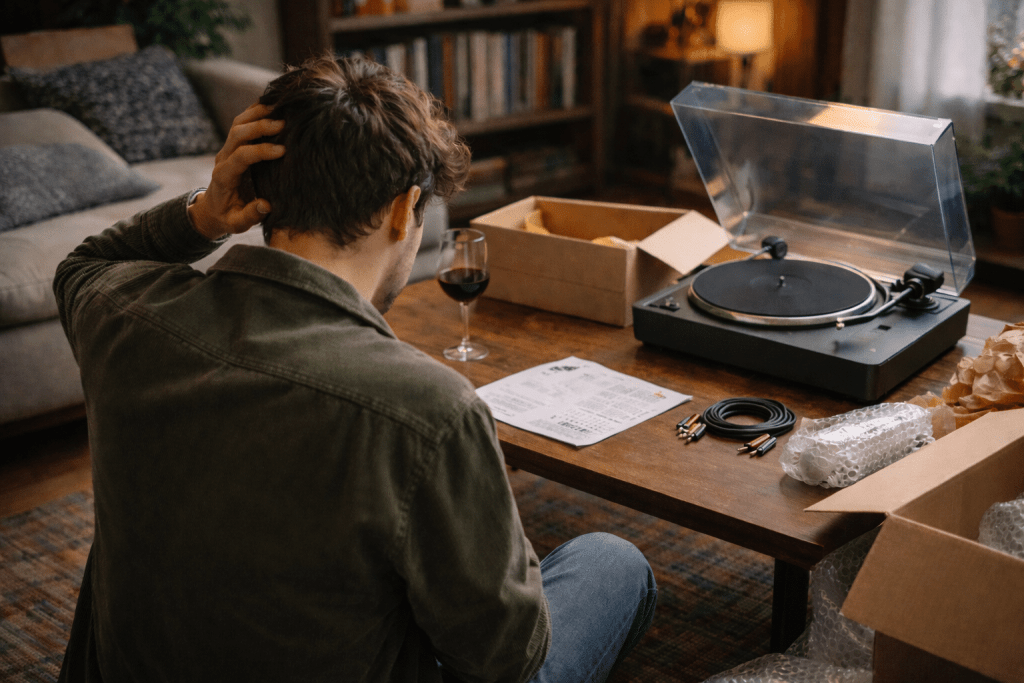
There’s a moment that happens after the box is opened.
The dust cover is still wrapped in plastic. The platter feels heavier than you expected. You set it on a shelf, step back, and realize something quietly important just happened: you didn’t just buy a device. You chose a ritual.
Vinyl isn’t complicated. But it does reward intention.
If you’re new to this or coming back after years away there are five small things that make the difference between “this sounds fine” and “this feels right.”
Let’s walk through them.
Start With a Brush (Before You Start With Anything Else)


Before upgrades. Before accessories. Before arguing about cartridges.
Buy a brush.
A simple carbon fiber record brush does three things:
- Lifts loose surface dust
- Reduces static
- Gives your stylus a cleaner path through the groove
It’s not deep cleaning. It’s maintenance. Think of it like rinsing a wine glass before pouring something good into it. If you spin records regularly, brushing before each play becomes automatic. Two rotations. Light touch. Done. It’s the smallest habit that protects the largest investment, your records.
(If you want specifics, we’ve broken down our favorites in the full Best Vinyl Record Brushes guide.)
A brush protects the surface. But what sits beneath the record matters just as much.
Let’s look under the vinyl.
Don’t Ignore What’s Under the Record


Slipmats don’t get enough attention. They look decorative. They aren’t.
The material between your platter and your record affects:
- Static
- Resonance
- Start/stop stability
- Overall feel
Felt is common. Cork can dampen differently. Rubber behaves another way entirely. You don’t need to overthink it, but you shouldn’t ignore it either. Especially if you’re running a vintage table or something with a lighter platter.
A slipmat is one of the most affordable ways to subtly tune your setup.
We go deeper into material differences in the Best Turntable Slipmats breakdown.
The surface is protected. The foundation is set.
Now let’s talk about what happens when dirt shows up anyway.
Clean Records Properly (Without Going Broke)


At some point you’ll notice it.
That soft crackle that wasn’t on Spotify. That faint whoosh between tracks. That’s not vinyl being “warm.” That’s dirt.
You don’t need a $500 ultrasonic machine to fix it, especially when you are just getting started. A quality manual record washer, whether it’s a classic Spin-Clean or the more compact HumminGuru EZ Record Washer can dramatically improve playback while helping extend the life of your collection.
The key is this:
Brushing is maintenance.
Wet cleaning is restoration.
If you buy used records (and you should), cleaning isn’t optional. It’s part of the culture.
We walk through a practical, budget-friendly approach in Spin Clean, Not Broke, and if you’re looking for a more modern manual cleaning system, our HumminGuru EZ Record Washer Review explores why it has become one of our favorite upgrades before making the jump to ultrasonic cleaning.
A brush protects the surface.
A slipmat protects the foundation.
But even with both in place, there’s one thing you can’t ignore.
Protect Both the Record and Its Jacket
The record carries the music. The sleeve carries the history.
Album art fades. Corners split. Ring wear creeps in slowly, the kind of damage you may not notice until it’s permanent. Outer sleeves aren’t flashy, and they don’t change the sound, but they protect everything you see and hold.
A simple polyethylene or polypropylene outer sleeve can help prevent:
- Shelf wear and corner dings
- Ring wear caused by pressure and friction
- Dust and minor moisture exposure
- Surface scuffs from sliding albums on and off the shelf
The record inside deserves the same consideration. A quality anti-static inner sleeve helps protect the vinyl from dust, debris, static, and the light scuffs that can come from repeatedly sliding it against an old paper sleeve.
If you’re building a collection you care about, even casually, protecting both the record and its jacket is one of the easiest, highest-return habits you can adopt.
For a closer look at materials, sleeve types, thickness, and the products I use, read our complete guide to the best inner and outer sleeves for vinyl records.
Sleeves are inexpensive, easy to use, and far cheaper than replacing a damaged record or jacket.
When You’re Ready, Upgrade the Cartridge
You don’t need to change the cartridge on day one.
Most modern turntables and many vintage ones come with something perfectly capable already installed. And if you’re just getting used to the rhythm of vinyl, that’s exactly where your focus should be.
But at some point, you’ll hear it.
A little more detail in the highs.
A tighter low end.
A sense that there’s more in the groove than what you’re getting now.
That’s where cartridges come in.
The stylus is the only part of your system that actually touches the record. Small changes here can have an outsized impact on how everything sounds.
It’s also where things can get complicated quickly, alignment, tracking force, compatibility. Not difficult, but not something you need to rush into either.
Start with the basics. Learn your system. Build your habits. And when you’re ready to take the next step, we’ve broken down a few cartridge options that balance performance, price, and ease of setup.
Build Order Before You Build Size


The temptation is real.
You buy three albums. Then seven. Then twenty. Suddenly you’re flipping through uneven stacks trying to remember whether Fleetwood Mac lives under F or M.
Organization sounds boring until it isn’t. Alphabet dividers. Genre buckets. A simple Discogs log. Whatever system you choose, choose one early.
Order protects:
- Condition
- Discoverability
- Your sanity
We talk through divider options and practical systems in Finding Order in the Stacks, because collecting is more enjoyable when you can actually find what you own.
The collection is growing.
Give it structure before it gives you chaos.
Because the best shelves aren’t the biggest they’re the ones you actually know.
Finally, Go Buy Some Records


You’ve got the turntable.
You’ve got the brush.
The slipmat.
A plan for keeping things clean and organized.
But none of it matters without music.
Start simple. Thrift stores. Yard sales. The neighbor clearing out a basement. A local shop with a used bin in the corner. Some of the best records you’ll ever own won’t come shrink-wrapped they’ll come with fingerprints and a story.
Keep your eyes open. Train your instincts. Don’t overpay when you don’t have to.
And if you’re just getting started, there’s nothing wrong with browsing the rotating lists of budget vinyl online. Amazon’s under-$15 vinyl section changes often, and it can be a practical way to build a foundation while you figure out what you actually love.
The goal isn’t to collect everything.
It’s to collect something that makes you want to flip the record over and listen again.
Start small.
Buy what you’ll actually play. And let your shelves grow at the pace of your listening.
It’s About the Ritual
You didn’t just buy a turntable. You chose a slower way of listening.
Take care of the surface.
Tune the foundation.
Keep the grooves clean.
Build shelves with intention.
Then sit down, pour something good, and press play.
(Affiliate links are included in this article. If you choose to use them, Needle & Vine may earn a small commission, but every recommendation is about usefulness, not hype.)