
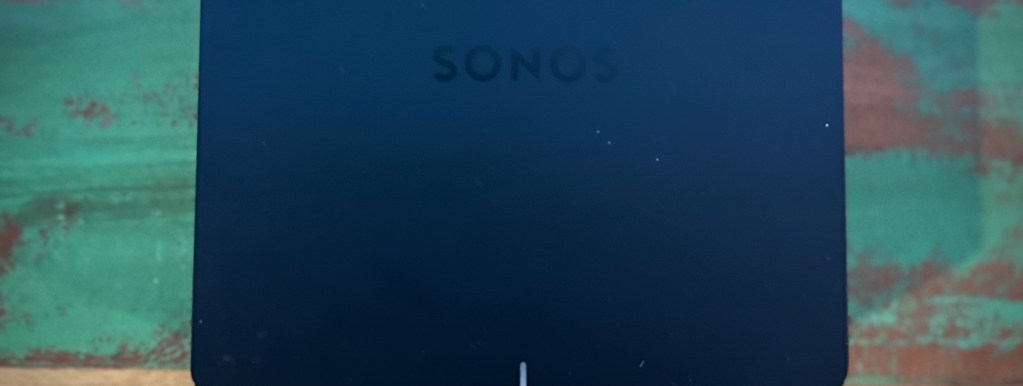
Sonos Port Review: Bringing Vinyl Into a Whole-Home System
There’s a certain expectation that comes with vinyl.
A chair. A room. A system that stays put.
You choose a record, lower the needle, and everything happens right there.
The Sonos Port quietly challenges that idea.
Not by changing the ritual, but by changing where it can go.
Because once your turntable is connected, your records are no longer tied to a single space. They move. From room to room. From background to centerpiece. From something you sit with to something that lives with you.
(Affiliate links are included below, but like all recommendations here, they’re about usefulness, not hype.)
That shift won’t be for everyone.
But if your listening life extends beyond one room, it starts to make sense.
What the Sonos Port Actually Does
At its core, the Sonos Port is a bridge.
It takes an analog signal like the output from your turntable and brings it into the Sonos ecosystem.
Once it’s there, your record can play across:
- A single speaker
- A stereo pair
- Or your entire home
It also works in reverse, sending Sonos audio out to a traditional amplifier. But for vinyl listeners, the real story is what it does on the way in.
It makes your turntable mobile.
Not physically, but functionally.
Connecting a Turntable to Sonos (What You Need)
This is where things get important and where a lot of setups go wrong.
A turntable alone isn’t enough.
You need a proper signal chain:
Turntable → Phono Preamp → Sonos Port
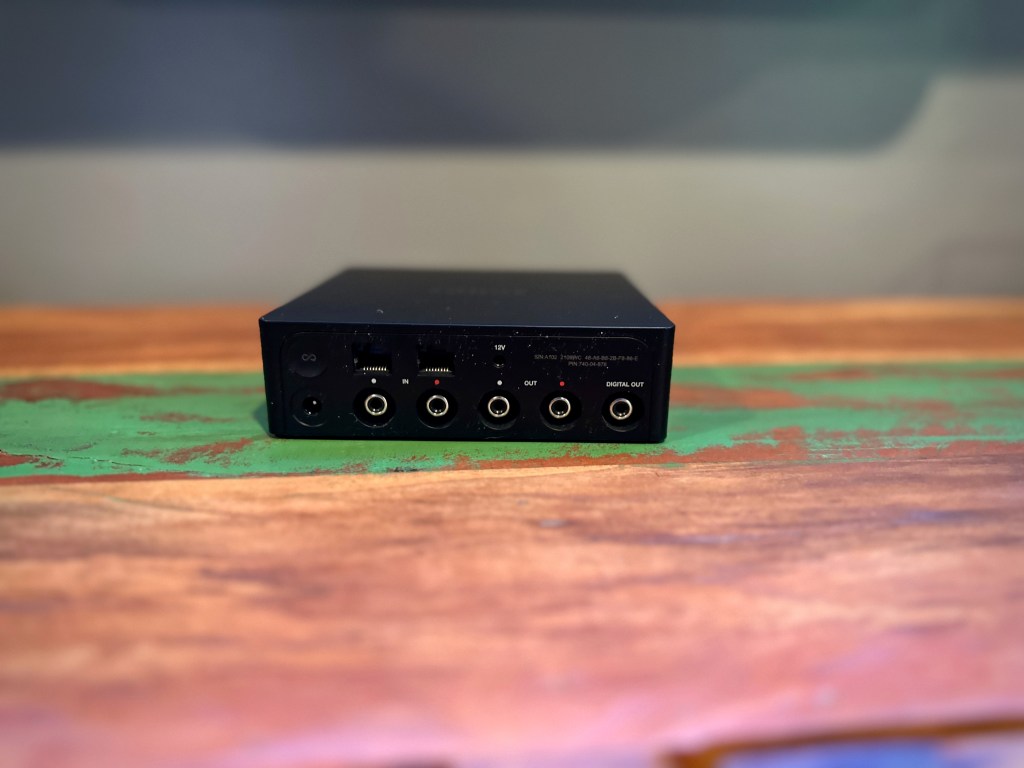
In my case, this was handled through the NAD 1020. It’s part of a larger analog system, and the phono stage there feeds cleanly into the Port without needing anything additional.
But that kind of setup isn’t required.
If you’re building something simpler, a standalone option like the U-Turn Pluto 2 Phono Preamp gets you to the exact same place. It handles the signal correctly, keeps the chain clean, and does it without adding much complexity.
That step matters more than it seems.
Without a proper phono stage, the signal coming from your cartridge is too low and not properly equalized. The Port won’t correct that for you.
Once connected, setup through the Sonos app is straightforward:
- Assign the line-in
- Choose autoplay behavior
- Select rooms or groups
From there, your records become part of your system.
If you’re still building things out, it’s worth spending time with your turntable setup first. The foundation matters more than the connection.
Where the Sonos Port Fits (And Where It Doesn’t)
The Port isn’t trying to replace a dedicated analog system.
If your setup revolves around:
- A carefully chosen cartridge
- A dialed-in preamp
- A vintage receiver like the Sansui 2000X
Then the Port will feel like a layer between you and the signal.
Because it is.
But if your listening life is spread across:
- Multiple rooms
- Shared spaces
- A mix of focused and casual listening
Then the Port starts to feel less like a compromise and more like an extension.
It’s not about improving vinyl.
It’s about expanding it.
Just connection, and playback.
Sound Quality vs Convenience
This is the tradeoff, and it’s worth being clear about it.
The Sonos Port converts your analog signal into digital so it can move through your network.
That introduces:
- A slight delay (latency)
- Digital conversion
- System-level processing
For purists, that’s enough to walk away.
But in practice, the experience depends on how you listen.
If you’re sitting in front of your system, focused on the details, a direct analog chain will always feel more immediate. If you’re cooking, hosting, moving between rooms, the Port offers something different:
Continuity.
The record doesn’t stop when you leave the room.
What You’ll Expect to Pay
The Sonos Port typically sits around the $499 range.
That places it in an interesting position.
For the same cost, you could invest in:
- A better cartridge
- A higher-end phono preamp
- Or upgrades to a traditional analog system
But none of those will do what the Port does.
They improve the signal.
The Port changes how that signal lives in your space.
- Brings your turntable into a whole-home Sonos system, letting your records move beyond a single room. Easy to integrate with existing setups and designed for flexible, everyday listening.
Final Note
The Sonos Port isn’t trying to improve vinyl.
It’s trying to move it.
If your system is built around a single chair, a single room, and a carefully chosen signal path, it may feel unnecessary.
But if your records are meant to follow you from listening room to kitchen, from office to patio it opens something traditional systems can’t.
Not purity.
Possibility.
And depending on how you listen, that may matter more.
If you’re building toward a setup like this, the pieces around it matter. A dedicated phono stage like the U-Turn Pluto 2 Phono Preamp keeps the signal where it needs to be before it ever reaches the Port, while a table like the Yamaha YP-800 reminds you what a fully analog system feels like when nothing sits in between.
And if you’re still finding your footing, it’s worth spending a little time with the fundamentals. Our guide on what to do after buying a turntable walks through the parts of the system that tend to matter most once everything is in place.
Because however you choose to listen, the goal isn’t just to play records.
It’s to live with them.