
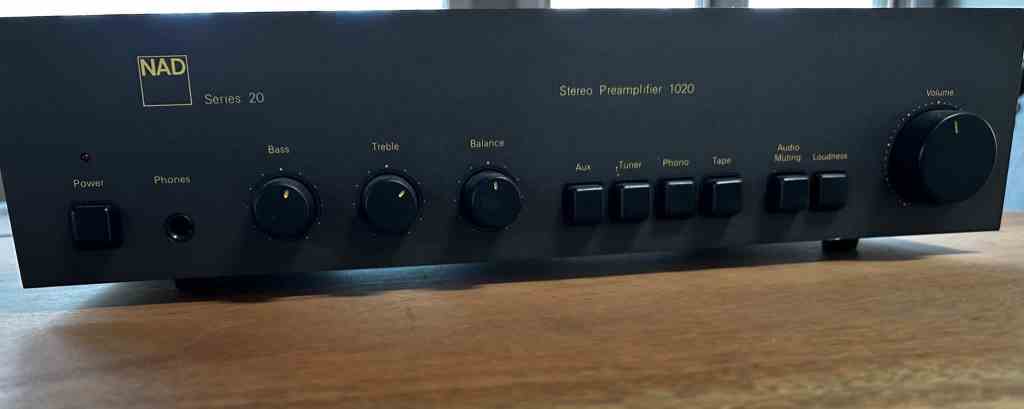
NAD 1020 Review: A Vintage Preamp Still Worth Owning?
Some components are conversation pieces. Others are foundation pieces.
The NAD 1020 is the latter.
It doesn’t glow with oversized meters. It doesn’t stream. It doesn’t try to impress from across the room. It simply sits in the middle of your system and does the quiet work shaping signal, managing sources, and letting vinyl speak without interference.
In a listening ritual built around intention rather than spectacle, that matters.
Let’s talk about what makes the 1020 special, where it falls short, what to look for on the used market, what you can expect to pay, and whether it still deserves space in a modern analog chain.

Affiliate Disclosure: Needle & Vine is supported in part through affiliate partnerships. If you purchase a product or vintage component through links in this article, I may earn a small commission at no additional cost to you. These partnerships help support independent reviews, restorations, and new content.
A Brief History of NAD Electronics
NAD (New Acoustic Dimension) was founded in 1972 with a philosophy that feels almost radical today: performance over flash. The brand had multinational engineering roots and early manufacturing in Japan, but its earliest commercial traction was strongest in the UK, Western Europe (particularly Germany and Scandinavia), and Canada.
The U.S. hi-fi market of the late 1970s was dominated by higher-wattage Japanese receiver brands, Pioneer Corporation, Sansui, Marantz, Kenwood Corporation many of which leaned heavily on visual impact and impressive power ratings.
NAD went in a different direction. Minimalist aesthetic. Sensible power. Strong circuit design.
The breakthrough moment in North America came with the NAD 3020 a modest-looking integrated amp that sounded far bigger than its specifications suggested. That success established NAD as a serious contender among value-focused audiophiles.
The 1020 preamp emerged from that same mindset: understated, practical, and built for people who cared more about how records sounded than how equipment photographed.
Today, NAD operates under the Lenbrook Group, producing modern Class D amplifiers, DACs, and streaming components. The technology has evolved dramatically. But the brand’s original ethos, honest performance at a fair price still echoes in pieces like the 1020.
Their current amps, in particular, feel like a thoughtful continuation of that lineage. Clean lines. Understated design. Modern streaming integration layered onto a familiar philosophy.
It’s encouraging to see a brand respect its past without being trapped by it.
Vintage Marketplace
Looking for a NAD 1020?
The NAD 1020 has earned a loyal following for its remarkably capable phono stage and straightforward design. Since it has been out of production for many years, the used market remains the best place to find a good example.
View on eBayAffiliate link. Price and availability may change.
What’s to Love About the 1020
The Phono Stage
For vinyl-first systems, this is the heart of the conversation.
The moving magnet phono stage in the 1020 is articulate and composed. It doesn’t add syrupy warmth or artificial gloss. It presents records in a balanced, confident way, controlled low end, clean midrange, and a top end that doesn’t fatigue.
It feels stable, grounded and for a vintage piece at this price point, that’s not insignificant.
Thoughtful Control Layout
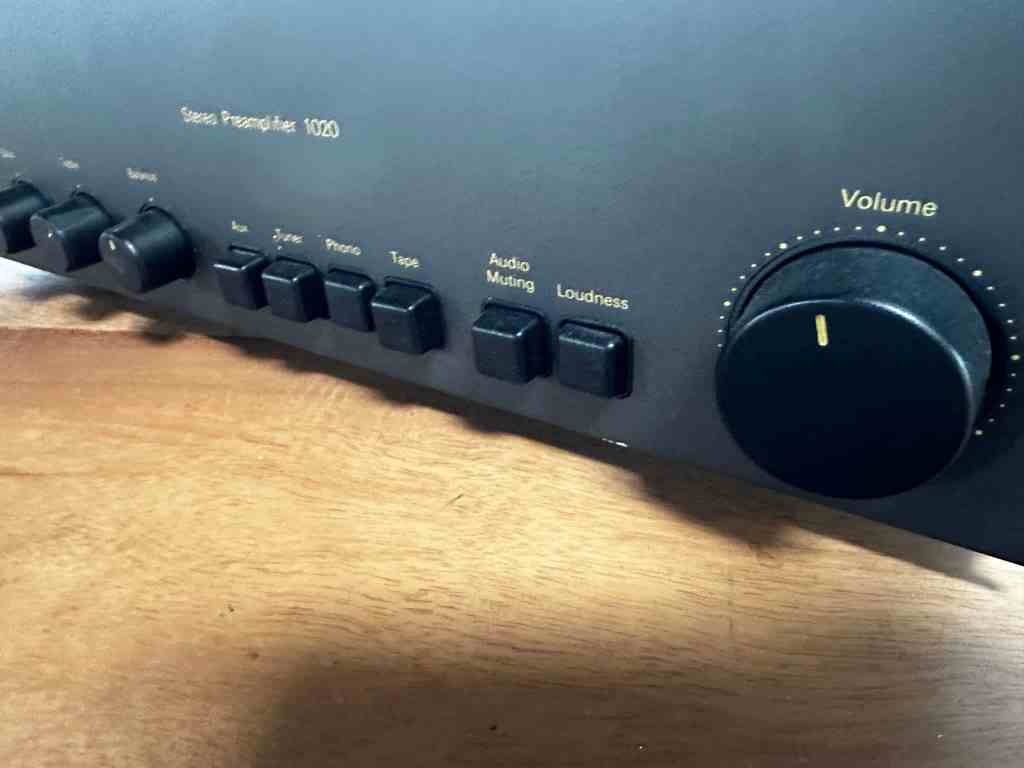
The front panel is classic NAD:
- Slim matte charcoal face
- Small, purposeful knobs
- Logical signal routing
- Subsonic filter and tone defeat
- Dual tape loops
There’s something tactile about it. Turning those small knobs feels intentional — part of the ritual rather than a distraction from it.
System Flexibility
As a standalone preamp, the 1020 integrates well in multiple system types:
Vintage Analog Chains
Turntable → NAD 1020 → Vintage Power Amp → Bookshelf Speakers
Hybrid Systems
Turntable → NAD 1020 (phono)
Streamer → DAC → NAD 1020 (line in)
→ Modern Power Amp → Neutral speakers
If you’re not running an outboard setup, the front headphone jack offers a more personal way in. Paired with something simple like the Koss Porta Pros, the 1020 leans into a kind of listening that feels less like playback and more like presence.
Analog Into a Streaming Ecosystem
Turntable → NAD 1020 (phono)
→ Line-in streamer or analog-to-digital converter
→ Sonos or Bluetooth ecosystem
This last configuration is where things get interesting.
The 1020 handles phono duties the way it was designed to, cleanly and competently and a modern streamer with line input can distribute that analog signal wirelessly throughout your home.
It’s a subtle bridge between eras.
Vinyl ritual in one room. Whole-home convenience in the background.
The Aesthetics: Quiet Confidence
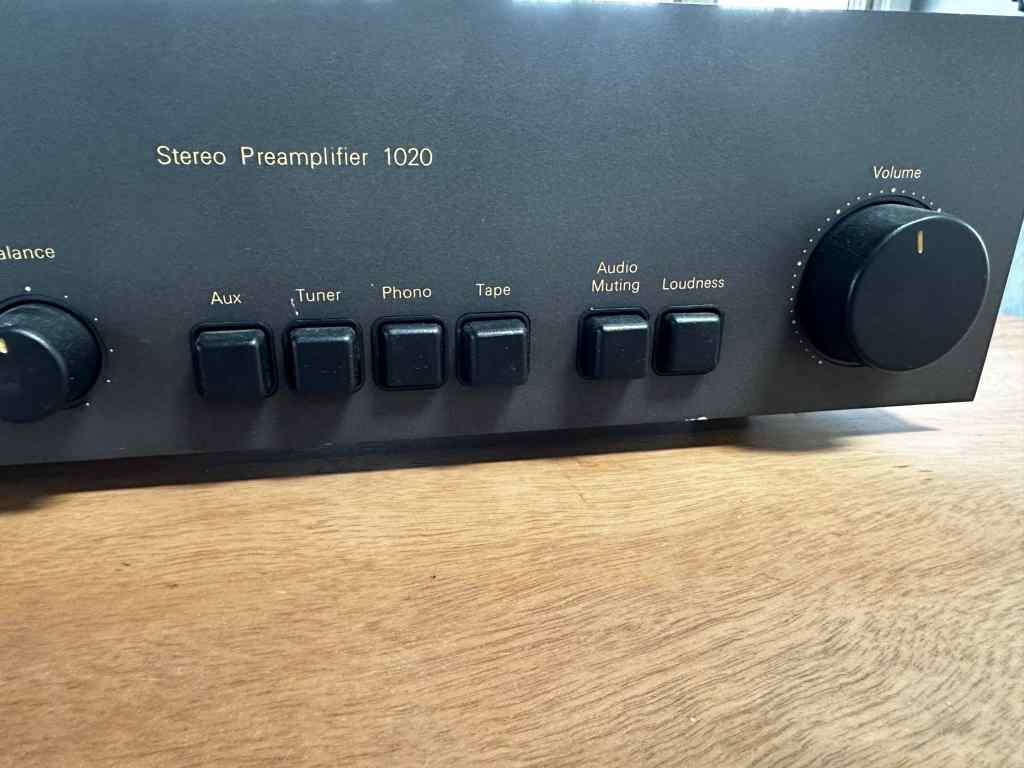

The 1020 isn’t beautiful in a silver-face Marantz way. It doesn’t have the tank-like build quality of a Sansui and it doesn’t carry the cult-level tape-deck mystique of Nakamichi. What it offers instead is restraint. Charcoal finish. Horizontal lines. A small, understated power LED.
The 1020 uses a small, understated power LED. On mine, it glows red. Whether original or replaced over time, it’s a reminder that vintage gear often carries subtle signs of the life it’s lived.
And for the price of entry, especially on the used market it’s a strong runner-up that deserves consideration. You’re not paying for collector hype. You’re paying for thoughtful circuit design and a capable phono stage.
Stacked with other NAD components, it looks cohesive. Paired with wood-sided gear, it adds contrast. It doesn’t demand attention and that quiet confidence ages well.
Customizing the Look: Warming Up the Minimalism
The NAD 1020 is intentionally restrained. Almost severe and I genuinely appreciate that. But in my listening space, surrounded by wood racks, record jackets, and warmer textures I wanted something that softened the presentation. So while writing this article I upgraded mine with a custom wooden faceplate that retained all of the original markings and layout. Same typography. Same labeling. Just wrapped in natural wood.
It was a subtle change, but it shifted the presence entirely.
Less lab equipment.
More instrument.
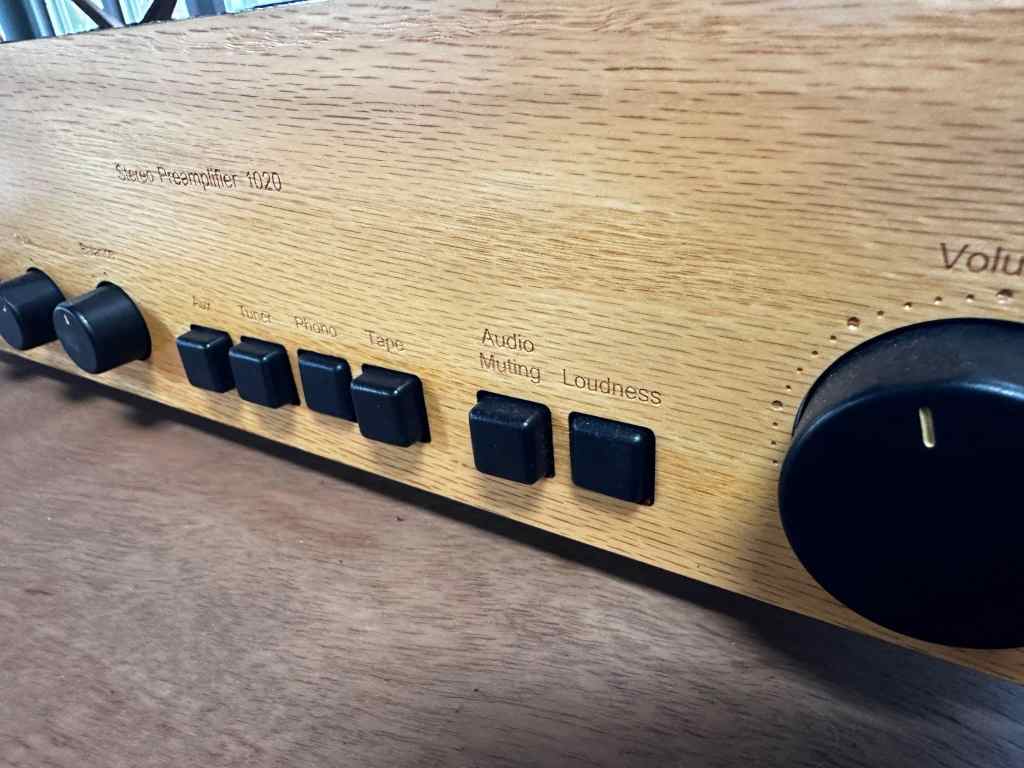
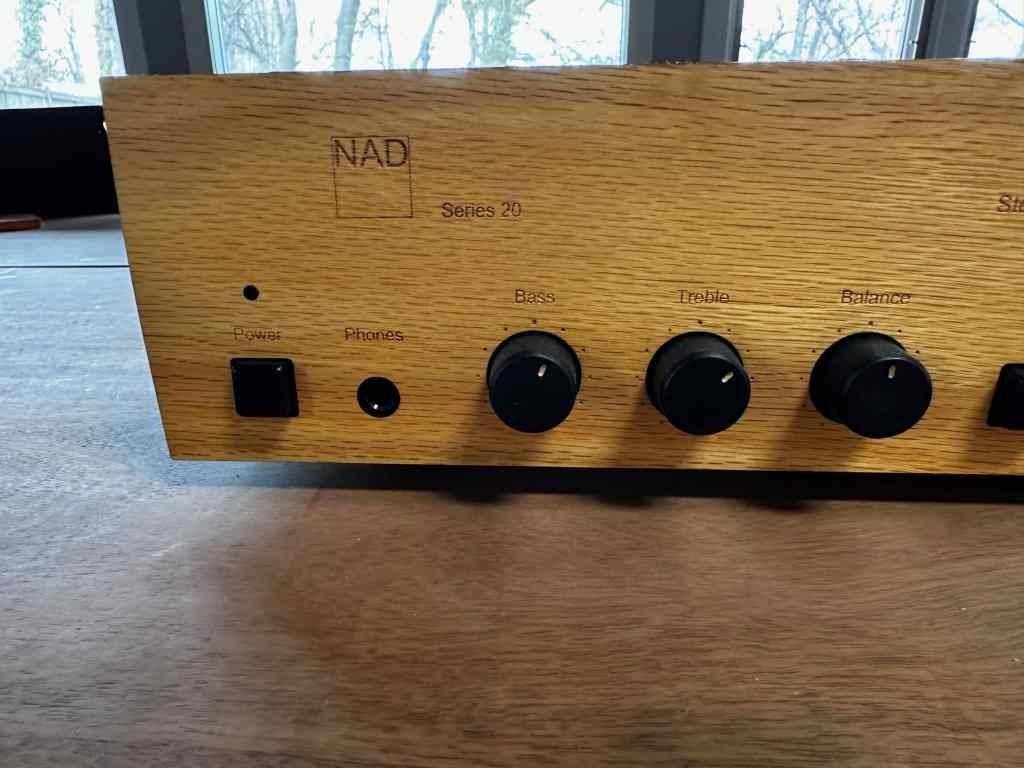

For those curious about this particular faceplate, I purchased mine from the eBay seller “i_sell_4_you” As of this writing, they offer similar replacement faces for the NAD 1020 and the NAD 3020, along with other vintage components.
I have no affiliation, just a good experience and a product that aligned with the look I was after.
Vintage gear often invites that kind of personalization. You’ll find options for replacement faceplates, wood side panels, and even full custom cabinets
That said, originality still matters. If you customize, keep the original parts safely stored. Future owners, or future you may appreciate that authenticity.
Customization shouldn’t erase history.
It should complement it.
What to Look For in a Used NAD 1020
When shopping make sure you check the following:
- Clean faceplate and intact lettering
- Balanced channels
- Fully functional phono stage
- Smooth control movement
Cosmetics matter. Electrical stability matters more.
What You Can Expect to Pay
The NAD 1020 isn’t a blue-chip collector piece and that’s part of its appeal. On today’s used market, you’ll generally see pricing fall into three tiers:
Untested / As-Is Units: $100–$175
Estate finds or “powers on” listings.
Expect cosmetic wear and likely service needs.
Working, Unrestored Units: $175–$300
Fully functional but original internally.
Pots may be scratchy. Capacitors likely aging.
Serviced / Recapped Units: $300–$450
Professionally cleaned or partially restored.
Higher upfront cost, less guesswork.
Condition and service history matter more than minor cosmetic imperfections. At these price levels, the 1020 sits in a comfortable middle ground, affordable enough to experiment with, serious enough to anchor a thoughtful analog chain.
You’re not buying status. You’re buying circuit design.
Buying Overseas? Read the Power Label First.
Vintage NAD pieces frequently surface from Europe and Japan. Sometimes the condition is better. Sometimes the pricing is attractive.
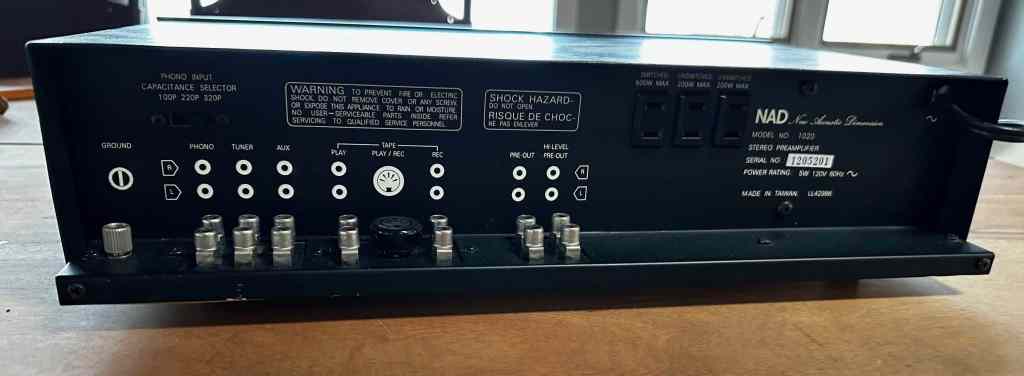
But always check the rear voltage rating.

The NAD 1020 was produced in:
- 120V (North America)
- 220–240V (Europe)
- 100V (Japan)
Using the wrong mains voltage long-term can stress components. External step-up or step-down transformer boxes technically solve the issue, but they add heat, potential noise, and clutter.
For a preamp at this price tier, it’s usually better to buy the correct regional version rather than rely on a bulky external converter humming under your rack.
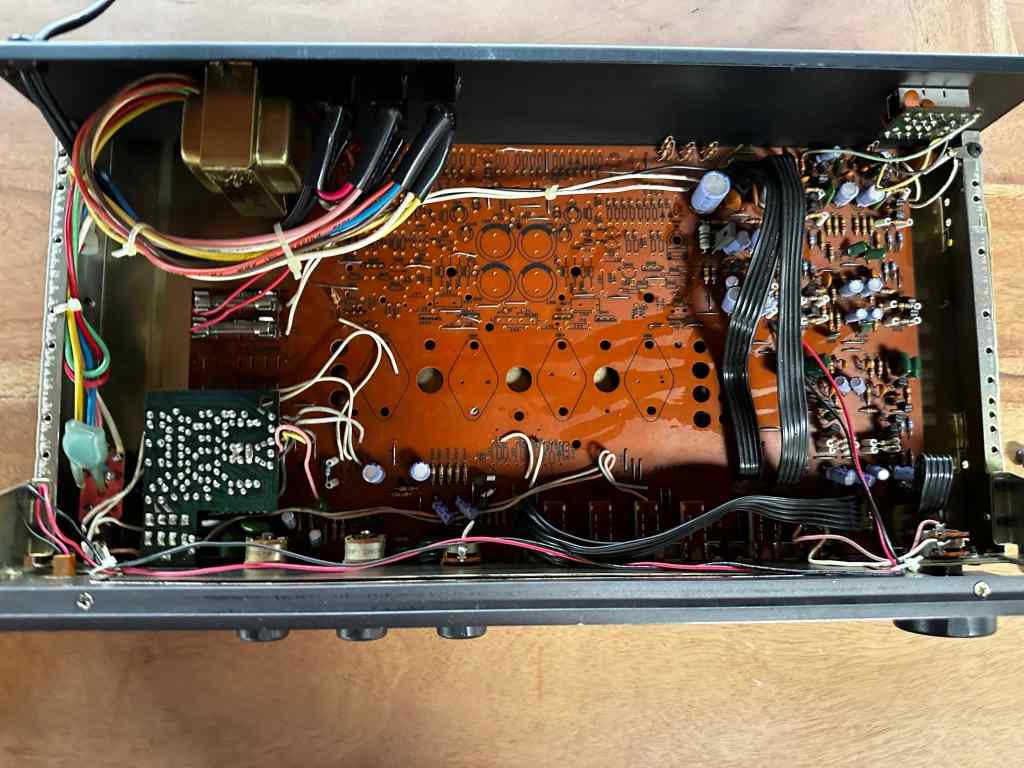
What Tends to Fail (And What Happened With Mine)
Age shows up in predictable ways:
- Internal signal and power components age over decades of use
- Input switches can get noisy or inconsistent over time.
- The power section can weaken over time.
- Volume and balance pots become scratchy
When I bought mine, the volume pot had significant static. Every adjustment came with a burst of noise that made you reach for the mute button. It felt serious. It wasn’t. Scratchy pots are one of the most common vintage audio issues.
If you’re not comfortable opening equipment, this is a straightforward job for a technician. If you are comfortable working inside electronics and you respect basic safety cleaning the potentiometer with proper contact cleaner is a manageable DIY fix.
In my case, careful cleaning restored smooth operation. The static disappeared. If cleaning doesn’t solve it, replacement pots can be harder to source depending on shaft type and taper. At that point, you weigh:
- Sentimental value
- Cosmetic condition
- Market value vs repair cost
And if we’re being practical? You can always find a comfortable listening level and leave the volume knob parked there.
Not elegant. Not ideal. But sometimes good enough.
A Quiet Listening Moment
In my system, the NAD 1020 doesn’t announce itself. It disappears.
Records feel steady and grounded, not exaggerated, not hyped. There’s a quiet competence to it that makes you stop thinking about gear and start thinking about the music. The volume knob turns. The needle drops. A side unfolds.
And somewhere in the middle of that process, you realize the equipment isn’t the story anymore.
The listening is.
What Isn’t Worth Repairing
If the transformer fails or the board suffers major trace damage, repair costs can exceed market value quickly. The 1020 is desirable, but not rare enough to justify unlimited restoration budgets unless it carries personal meaning.
Final Note
The NAD 1020 doesn’t chase features. It doesn’t modernize itself. It doesn’t try to compete with contemporary integrated streamers. What it does is sit quietly between your sources and your power amp, shaping signal with restraint and competence.
In a listening ritual built around slowing down, placing a record on the platter, lowering the tonearm, letting a side unfold, the 1020 feels appropriately understated.
Not flashy. Not legendary, but dependable.
We’ve explored that same kind of grounded design in our reflection on the Yamaha YP-800.