
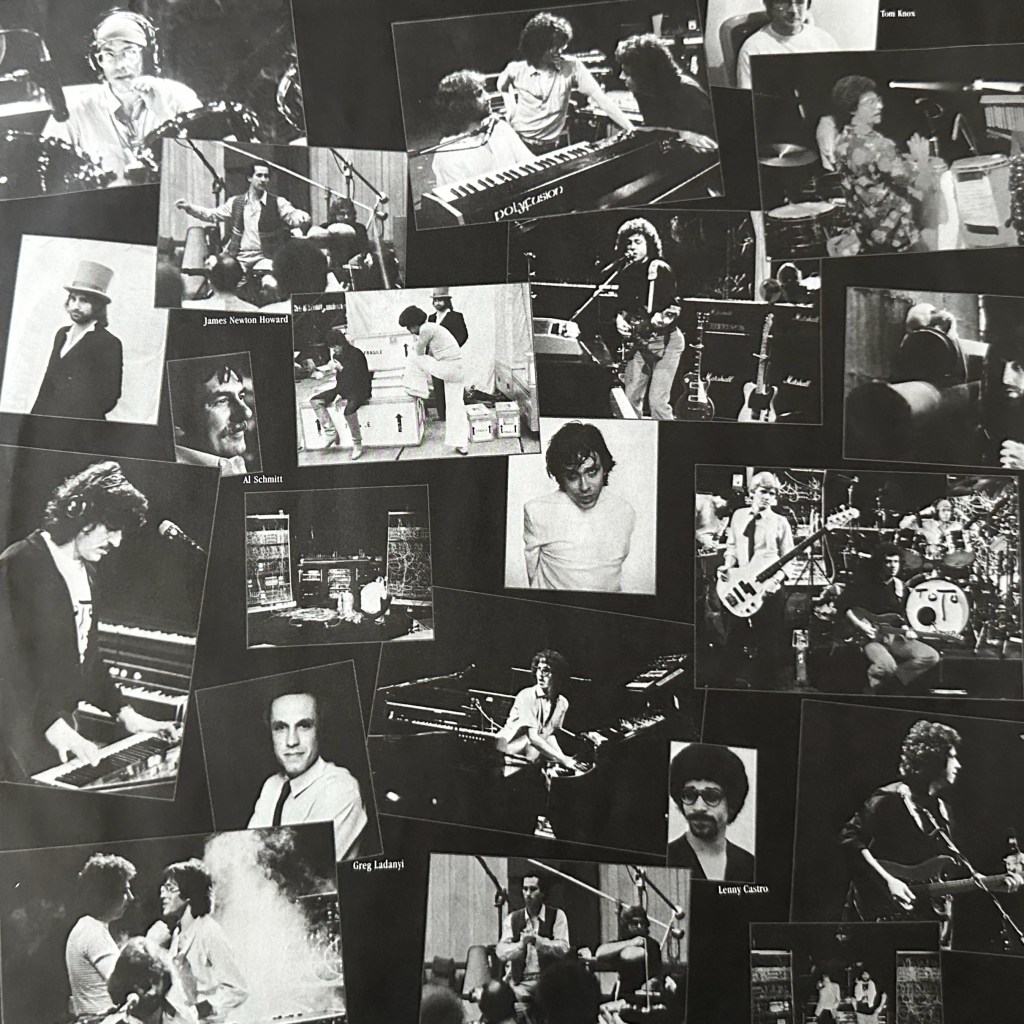
Toto IV Vinyl Review: Revisiting One of the Best-Sounding Albums of the 1980s
Not every perfect album feels human. Toto IV somehow manages both.
Wine Score: ★★★★☆ (4/5)
Album Score: ★★★★☆ (4/5)
Scores reflect my personal experience, less about perfection, more about vibe.
If you remember my review of Ghost in the Machine, you probably remember me talking about “Roxanne.” I don’t know why these “R” girl songs always seem to land with me, but “Rosanna” from Toto IV is another one that pulls me in almost immediately.
And unlike a lot of albums that slowly build momentum, Toto IV doesn’t wait around. The groove arrives fast, Jeff Porcaro’s shuffle settling in almost immediately. The production opens wide. And before Side A even has time to breathe, Toto reminds you why this record became one of the defining studio albums of the early 1980s.
More than forty years later, this Toto IV vinyl review exists for a simple reason: the album still sounds incredible. What follows is polished almost to perfection, but somehow never lifeless. That’s the trick Toto IV still pulls off better than most albums from its era.

The Listening Ritual
Before the needle drops, set the tone. Whether you’re revisiting this album or hearing it for the first time, here’s how to experience it fully.
🎧 Start the Record
Stream the album on your preferred platform and settle into the mood before the first side begins.
🍷 Pour the Pairing
Bring the full experience together with a bottle that complements the character of the record.
Availability may vary by location.
🎵 Own the Record
For readers who want the full analog experience, here’s where to track down the album on vinyl.

Why Toto IV Still Sounds Incredible on Vinyl
There’s a certain kind of album that immediately tells you whether your stereo system is awake.
Toto IV is one of those records.
Not because it is aggressive or overly dynamic, but because everything inside the mix is so carefully placed that even small improvements in your setup become obvious. Better cartridge alignment, quieter phono stages, warmer amplification, cleaner speakers, this album notices all of it. And somehow, despite all that technical precision, it never loses the feeling of musicians actually playing together.
That balance is probably why the record still holds up more than forty years later.
“Rosanna” arrives with that unmistakable groove almost immediately, Jeff Porcaro’s shuffle pulling the entire track forward while layers of keyboards, guitars, percussion, and vocals settle into place around it. Then later, tracks like “Africa” open outward even further, giving the album this massive sense of atmosphere without collapsing into excess.
On vinyl especially, the record breathes differently.
The low end stays rounded and controlled. The vocal harmonies float instead of crowding the center image. Reverb trails hang just long enough to make the production feel cinematic without becoming artificial. It is polished, unquestionably, but not cold.
That distinction matters. A lot of early-80s studio albums chased perfection.
Toto IV actually understood restraint.

The Musicianship Behind Toto IV
Even if you know almost nothing about Toto beyond “Africa” and “Rosanna,” it only takes a few tracks on Toto IV to realize this band could really play. Not in the self-indulgent way some technically skilled bands can feel, where every song turns into a showcase. The musicianship here works because it always stays connected to the mood of the album itself.
Everything feels smooth, controlled, and incredibly confident.
The grooves settle in naturally. The transitions feel effortless. Small details appear in the background without distracting from the songs. And the deeper you get into the record, the more you start noticing how carefully everything is arranged.
That’s part of what makes Toto IV such a rewarding vinyl listen.
On lesser albums from this era, big production can sometimes flatten the music into something glossy but emotionally distant. Here, the precision actually helps build space around the music. The keyboards feel wide without sounding artificial. The guitars add texture instead of dominance. The drums push songs forward without overwhelming the mix.
Even the quieter moments feel intentional.
And while I wouldn’t pretend to be a Toto historian or studio expert, this album gives off the unmistakable feeling that everyone involved understood exactly what they wanted these songs to sound like before the tape ever started rolling.
That clarity still comes through decades later.
Listening to Toto IV on a Vintage Stereo System
Toto IV feels almost perfectly built for vintage audio gear. Not because it sounds old, but because older systems tend to soften just enough of the album’s precision to make it feel warmer and more human. That balance matters with a record like this. On overly clinical equipment, some of the polish can start pulling attention away from the music itself. But through a good vintage receiver, the album settles into the room differently.
The edges round out a little. The vocals gain texture. The low end feels fuller instead of sharp.
This is where the record really clicked for me.
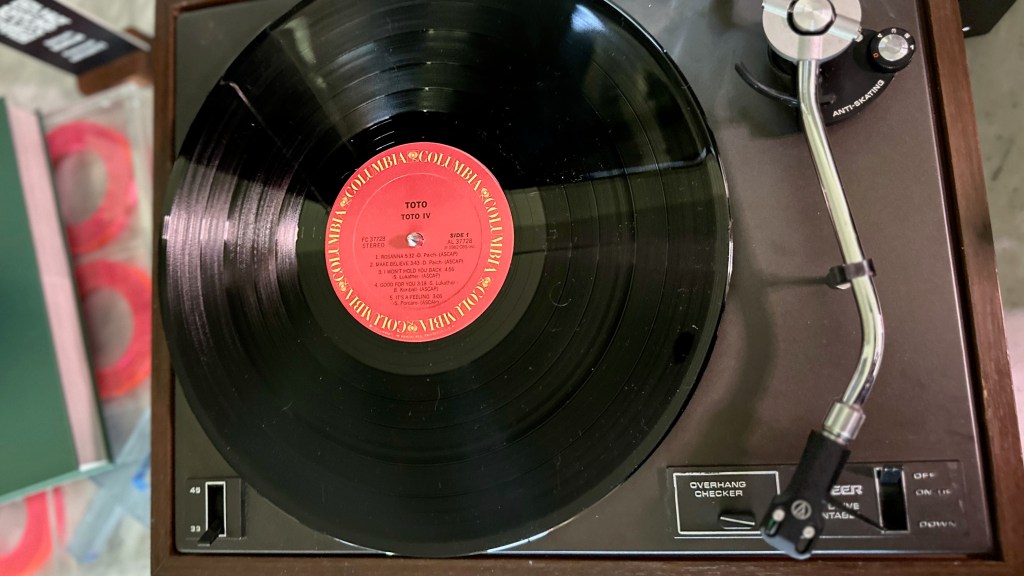
On my current chain, running the Yamaha YP-800 through the NAD 1020 into the Sansui 2000X, Toto IV becomes less about analytical listening and more about atmosphere. The separation is still there, you can absolutely hear how carefully everything was recorded, but the warmth of the older gear keeps the album grounded.
“Rosanna” grooves instead of simply impressing.
“Africa” opens outward and fills the space naturally.
And quieter tracks like “I Won’t Hold You Back” suddenly feel far more intimate than their reputation would suggest.
This is also one of those records that rewards volume. Not stadium volume.
Just enough to let the room start participating a little.
Once the speakers begin to breathe, the production makes more sense. The reverbs stretch out, the harmonies gain depth, and the layered instrumentation stops sounding like separate pieces and starts feeling like a single performance unfolding across the room.
There’s a difference between hearing Toto IV and actually sitting with it. On vinyl, through the right system, the album stops feeling like a collection of classic rock radio staples and starts sounding like what it probably always was underneath: a carefully constructed late-night listening record.
What to Expect to Pay
One of the better things about collecting Toto IV on vinyl is that the album still feels accessible. Despite how iconic it became, original copies were pressed in huge numbers during the early 1980s, which means you can still walk into a decent record store and realistically find one sitting in the bins without spending months hunting for it online.
That makes this album a pretty great value for vinyl listeners.
You’re getting an exceptionally well-recorded album, multiple genuinely timeless tracks, and a pressing that can sound remarkably impressive on even modest stereo systems, all without entering the price territory some classic rock albums now demand.
Typical pricing usually falls into a few categories:
- Thrift Store / Rough Copy $3–10
- Clean Original Pressing $15–35
- Excellent Collector Condition $40–75
For most listeners, a clean original pressing is probably the sweet spot. You do not need a rare audiophile version of Toto IV to appreciate what makes the album special. The recording itself already carries so much depth and separation that even standard pressings can sound fantastic when they’ve been properly cared for.
Condition matters more than rarity here.
Because the album leans heavily on atmosphere, quieter passages, and layered production, groove wear and surface noise become noticeable fairly quickly. A noisy copy of Toto IV loses some of the smoothness that makes the record work in the first place.
Still, compared to many albums from the same era, this remains one of the more approachable “great sounding” records to add to a collection. And honestly, it deserves to be played.
This isn’t one of those records I’d buy strictly to archive on a shelf. Toto IV feels best when it’s actually spinning, preferably late at night, with the lights low and Side A already halfway gone before you realize how long you’ve been sitting there listening.

The Groove and the Glass
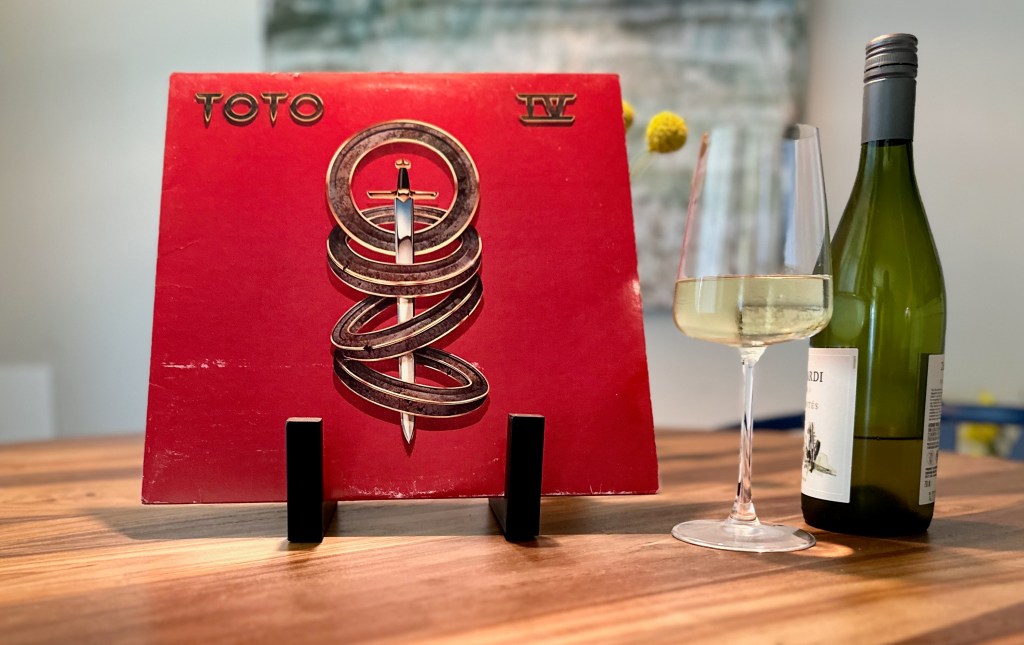
The Pairing: Flowers Sonoma Coast Chardonnay 2023
From the cool edges of the Sonoma Coast, this Chardonnay carries the same kind of polished restraint that makes Toto IV work so well on vinyl.
It’s layered without becoming heavy. Precise without feeling clinical. There’s enough texture to match the album’s dense studio production, but the acidity keeps everything moving instead of settling into excess.
Which honestly feels a lot like this record.
Tracks like “Rosanna” and “Africa” are packed with detail, harmonies, percussion, keyboards, guitars, reverb trails everywhere, yet the album never feels crowded. The Flowers Chardonnay behaves similarly. Citrus, mineral notes, restrained oak, and soft texture all arrive in balance rather than competition.
Nothing pushes too hard. And that’s what makes the pairing click.
Like Toto IV, the wine opens gradually. The first sip feels clean and structured, but given a little time, more warmth and depth begin to appear underneath the surface.
How to Pour
- Slightly chilled, around 50–55°F
- Medium white wine glass
- Give it 10 minutes after opening before the first pour
- Keep the lighting low and let Side A play uninterrupted
This isn’t a loud pairing.
It’s the kind of bottle that fits naturally into the atmosphere the album creates, late evening, vintage stereo glow, and the realization somewhere during “Africa” that you stopped paying attention to everything else in the room.
Charles’ Pour Notes
Wine: Flowers Sonoma Coast Chardonnay 2023
Profile: Citrus, restrained oak, layered texture, mineral edgeepper, subtle earth, lifted acidity
Pairing Mood: Polished, atmospheric, and quietly immersivec, expressive, and constantly in motion
There’s a smoothness to this wine that fits Toto IV almost perfectly. Nothing arrives too aggressively. The texture builds gradually, the acidity keeps things moving, and the finish lingers just long enough to pull you back for another sip.
It mirrors the album in a similar way.
The production on Toto IV is dense with detail, but never exhausting. Everything feels carefully placed, balanced, and controlled without losing warmth. This Chardonnay carries that same sense of restraint, refined enough to match the record’s precision, but relaxed enough to disappear naturally into the listening experience.
The result feels less like a pairing and more like an atmosphere.
A Final Note
There’s a reason Toto IV keeps surviving generation after generation of changing music trends, radio burnout, and internet jokes.
The album is just incredibly well made.
Not only from a technical standpoint, though that part is undeniable, but from a listening standpoint. The pacing works. The atmosphere holds together. The production still feels massive without becoming exhausting. And underneath all the polish, there’s still enough warmth to make the record feel human.
That balance is harder to pull off than it sounds.
On vinyl especially, Toto IV becomes something more immersive than its reputation sometimes suggests. Removed from playlists, algorithms, and overplayed radio rotations, the album settles back into what it probably always was meant to be: a carefully constructed late-night listening record.
One built for stereo systems, dim rooms, and uninterrupted sides of music. And honestly, that’s probably why I keep coming back to it.
Not for nostalgia.
Not ironically.
Not because “Africa” became immortal online.
If this kind of listening experience resonates, you might also find yourself returning to Rumours for its layered, immersive flow, Honky Château for its warm analog intimacy and late-night character, or Getz/Gilberto for something equally fluid, but more understated.