
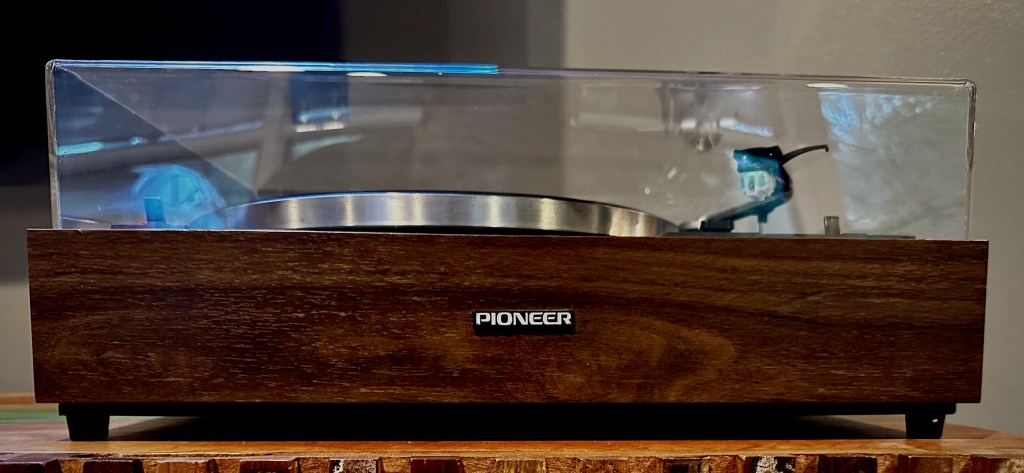
Pioneer PL-12D Review: Where Vintage Simplicity Still Works
A vintage turntable that trades precision for feel and ends up giving you something better.
The Pioneer PL-12D didn’t make an impression right away.
It wasn’t the kind of turntable that announces itself with weight or precision. No polished metal edges catching the light, no sense that everything has been engineered to the edge of tolerance. At first glance, it feels almost too simple, belt drive, manual operation, a layout that hasn’t changed much in decades.
But that’s not really what it’s about.
In this Pioneer PL-12D review, the appeal starts to come into focus once you stop looking for perfection and start listening for something else entirely. There’s a looseness to it, a kind of natural movement in the way records play through, that doesn’t try to impress you upfront. It builds slowly, side by side, record by record, until you realize the experience feels less technical and more human.
Affiliate Disclosure: Needle & Vine is supported in part through affiliate partnerships. If you purchase a product or vintage component through links in this article, I may earn a small commission at no additional cost to you. These partnerships help support independent reviews, restorations, and new content.
Is the Pioneer PL-12D Worth It?
The Pioneer PL-12D is worth it if you’re looking for a simple, musical vintage turntable that prioritizes feel over precision. It doesn’t offer the detail or control of more modern designs, but it delivers a relaxed, engaging listening experience that makes it easy to stay with a record from start to finish.
For those just getting into vintage audio or anyone looking for a second table with a different character, it remains one of the most approachable and rewarding options available.
Best for: listeners who value rhythm, warmth, and simplicity over technical precision.
Pioneer PL-12D Review: First Impressions
Pioneer PL-12D at a Glance
Before getting into it, here’s a quick look at what the Pioneer PL-12D is and what it isn’t.
| Category | Details |
| Type | Belt-drive, manual turntable |
| Era | Early 1970s |
| Sound Profile | Warm, slightly relaxed |
| Best for | Entry into vintage vinyl setups |
| Watch for | Belt wear, aging components |
On paper, none of this stands out. But in practice, it’s more than enough to support what the PL-12D does well.
A Vintage Pioneer Turntable That Feels Different


The first thing you notice about the Pioneer PL-12D isn’t what it does, it’s what it doesn’t try to do.
There’s no immediate sense of precision or weight demanding your attention. It doesn’t feel engineered to impress in the way some vintage tables do. Instead, it presents itself quietly. A wood veneer plinth, a straightforward tonearm, controls that feel familiar even if you’ve never used one before.
It’s approachable. And that’s part of what makes it easy to underestimate.
Compared to something like the Yamaha YP-800, which carries a certain visual and physical presence, the PL-12D feels lighter, more relaxed. Less concerned with making a statement, more focused on simply doing its job.
At first, that can read as a limitation. But given a little time, it starts to feel intentional.
Vintage Marketplace
Looking for a Pioneer PL-12D?
The Pioneer PL-12D has become a favorite among vinyl enthusiasts for its simple, reliable belt-drive design and excellent upgrade potential. Although it has been out of production for decades, well-maintained examples can still be found on the used market.
View on eBayAffiliate link. Price and availability may change.
Simplicity Over Features
The Pioneer PL-12D is about as straightforward as a turntable gets.

Manual operation. Belt drive. No automation beyond what your hands provide. You cue the record, you lift the arm, you flip the side. That’s the experience.
And in a way, that’s the point.
There’s nothing here competing for your attention, no extra mechanisms, no layers of complexity between you and the record. What you’re left with is a system that asks just enough of you to stay engaged, without ever becoming demanding.
It slows things down. Not in a dramatic way, but just enough to make the act of playing a record feel deliberate again. If you’re coming from modern gear, or even more feature-heavy vintage tables, that simplicity can feel like a step back.
But spend a few sides with it, and it starts to feel more like a shift in perspective.
Build and Design of the Pioneer PL-12D Turntable
Belt Drive Simplicity
At the center of the Pioneer PL-12D is a belt drive system that feels as straightforward as the rest of the table.
There’s no attempt to disguise it or elevate it beyond what it is. The motor drives the platter through a simple belt, isolating vibration in a way that prioritizes smoothness over speed accuracy. It’s a design that favors consistency and feel, even if it gives up a bit of precision compared to direct drive systems.
And that tradeoff is noticeable, but not in the way you might expect.
The PL-12D doesn’t feel unstable or loose. Instead, it settles into a kind of steady rhythm. There’s a softness to the way records start and carry through, less immediate than modern decks, but more forgiving. Surface noise feels slightly less intrusive, and the overall presentation leans toward ease rather than edge.
It’s not trying to be exact.
It’s trying to be listenable.
The Plinth, Tonearm, and Overall Construction
Physically, the Pioneer PL-12D is lighter than you might expect.
The wood veneer plinth gives it a classic look, but underneath, the construction is relatively simple. There’s no heavy isolation system, no layered materials designed to damp every possible vibration. Instead, it relies on basic suspension and placement to do most of the work.
The tonearm follows the same philosophy.
It’s functional, balanced, and easy to work with, but not particularly refined by modern standards. Adjustments are straightforward, which makes it approachable, especially if you’re just getting comfortable with cartridge alignment and tracking force.
Nothing about it feels overbuilt. But nothing feels fragile either.
It sits in that middle ground where usability takes priority over engineering ambition. And for a lot of setups, that’s exactly what you want.
What Age Looks Like on a Vintage Table
If you’re looking at a Pioneer PL-12D today, you’re not looking at a pristine object, you’re looking at something that’s been around for decades.
And it shows.
Dust covers are often scratched or cracked. Veneer can fade or lift at the edges. The top plate may show signs of wear, sometimes even slight bubbling or discoloration depending on how it was stored. None of this is unusual, and most of it doesn’t affect how the table performs.
But it does change how you approach buying one.
Condition matters more than specs. A well-kept PL-12D with honest wear will almost always be the better choice over a cleaner-looking unit with unknown history. These tables aren’t rare, but good examples take a bit of patience to find.
And once you do, the imperfections tend to feel less like flaws and more like part of the story.
It’s not a table you expect to look new. It’s one you expect to still work. And in practice, that expectation doesn’t always show up right away.
What Mine Looked Like When It Arrived
Shipping Damage and First Impressions
When the turntable arrived, I was already concerned.
The box had dents and divots, and as I lifted it, I could hear things shifting inside. Not a good sign.
Once opened, it was clear the shipper meant well, but missed a few key prep steps. The original dust cover didn’t survive. It was completely destroyed, cracked and separated beyond repair. Fortunately, this wasn’t entirely unexpected. The seller had already noted scratches, and it was likely going to need replacement anyway.
The mat wasn’t original either.
That’s not a major issue. A proper replacement is easy to find, and in this case, swapping it out actually helped bring the table back closer to what it would have felt like in the 1970s.
Wear, Age, and Easy Fixes
The platter showed its age right away.
Dull, slightly worn, nothing dramatic, but enough to stand out. A quick polish with a basic metal cleaner brought it back almost immediately. Not perfect, but close enough that it no longer felt like something that needed attention.
A few smaller setup details stood out as well. The counterweight and scale had been separated and were installed backwards. An easy fix once noticed, but something worth checking before dialing things in.
The lateral weight was also missing. It’s not strictly required for basic playback, but replacing it helped bring the table back to its intended balance and feel.
That’s the thing with these tables
.
A lot of what looks like wear at first glance is surface-level. With a little time, most of it can be brought back without much effort or cost.
The Real Issue: A Seized Spindle
The bigger issue was underneath.
The spindle was completely seized, and the table couldn’t maintain consistent speed. It would turn, but not quite at consistent 33 or 45 RPM, just enough off to notice it.
Once the spindle was removed, the problem was obvious. It wasn’t moving freely at all. Old oil had thickened over time, creating resistance that directly impacted speed stability.
This is where the design of the PL-12D works in your favor.
Because it’s simple and serviceable, fixing it didn’t require anything complicated. A replacement spindle and housing about $20 along with proper cleaning and lubrication, brought the table back to where it should be.
A Small Investment, A Long Life
Taken together, none of these issues felt like dealbreakers.
A dust cover, a mat, a bit of cleaning, a replacement spindle, small investments that add up to a table that’s fully functional again. And considering how reliable these turntables are once they’re properly set up, it feels like a fair trade.
Not perfect out of the box.
But very much worth bringing back.
Pioneer PL-12D Specs and Setup Notes
Key Specifications
The Pioneer PL-12D doesn’t overwhelm you with specifications, but the fundamentals are all there and they’ve aged better than you might expect.
| Specification | Details |
| Drive Type | Belt-drive |
| Operation | Manual |
| Speeds | 33⅓ RPM, 45 RPM |
| Motor | AC synchronous motor |
| Platter | Aluminum alloy, approx. 1.2 kg |
| Tonearm Type | S-shaped, static-balanced |
| Effective Length | Approx. 221 mm |
| Headshell | Detachable (SME-type mount) |
| Cartridge Type | Moving magnet (recommended) |
| Tracking Force | Adjustable |
| Anti-Skate | Adjustable |
| Wow & Flutter | 0.07% WRMS (approx.) |
| Signal-to-Noise Ratio | 60 dB (approx.) |
| Dimensions | 480 x 175 x 410 mm |
| Weight | Approx. 7 kg (15.4 lbs) |
It’s a fully manual, belt-drive turntable with a two-speed system (33⅓ and 45 RPM), designed around a relatively low-mass platter and a simple AC motor. There’s no pitch control here. Speed is set by the mechanics, and like most tables of this era, it benefits from occasional maintenance to keep everything running true.
The tonearm is a static-balanced, S-shaped design with a detachable headshell, which makes cartridge swaps far more approachable than they might seem at first. Tracking force and anti-skate are both adjustable, giving you enough control to dial things in properly without overcomplicating the process.
Nothing here is cutting-edge. But it’s complete.
And more importantly, it’s understandable, everything you need is accessible, and nothing feels hidden behind layers of design.
Cartridge Pairing and Adjustments
This is where the Pioneer PL-12D starts to open up a bit.
Because the tonearm is relatively forgiving, it pairs well with a wide range of cartridges, especially moving magnet options. Something like a Shure, Audio-Technica, or Ortofon cartridge tends to sit comfortably here without requiring constant adjustment.
My unit arrived with a fairly standard entry-level cartridge, the Audio-Technica AT3600L. There’s nothing fundamentally wrong with it, it’s a capable, easygoing option, but in my setup, it felt a little limited.
Swapping it out made a noticeable difference.
I moved to an Audio-Technica AT-VM95E/H, a simple headshell and cartridge combination that fits the character of the table well. It didn’t transform the PL-12D into something it isn’t, but it gave the sound a bit more clarity and balance without losing the relaxed presentation that makes the table work in the first place.
It doesn’t demand perfection, and that works in your favor.
Setup is straightforward, set your tracking force, dial in anti-skate, and make sure alignment is reasonably close. You don’t need to chase exact measurements to get a good result. In fact, the table seems to respond better when you focus on balance rather than precision.
It’s a good platform to learn on.
Not because it simplifies things to the point of being basic, but because it gives you room to understand what each adjustment actually does.
In my setup, I paired the PL-12D with a simple external phono stage to bring it into a more modern system. Something like the U-Turn Pluto 2 keeps the signal clean without adding complexity, making it easy to connect a vintage table like this to powered speakers or even a Sonos setup.
The Overhang Gauge (and Why It Matters)
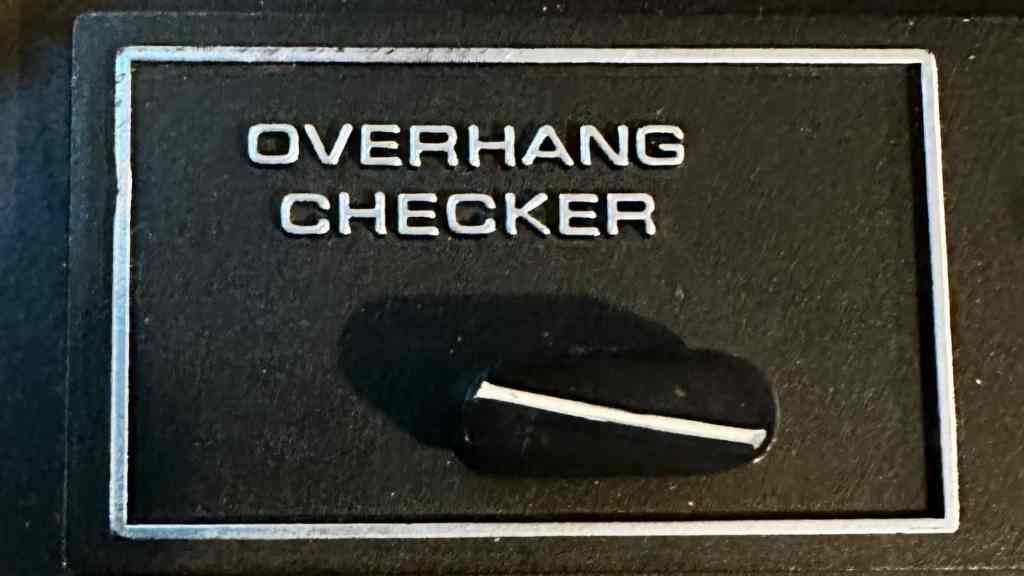

One detail that often gets overlooked on the PL-12D is the included overhang gauge.
It’s a small plastic tool, simple in design, but surprisingly useful.
Instead of relying on printed protractors or chasing alignment grids, you can set your cartridge position directly using the gauge. Slide the cartridge in the headshell, align it to the specified overhang, tighten it down, and you’re very close to where you need to be.
It removes a layer of guesswork.
Not entirely, but enough to make setup feel approachable instead of technical.
For an entry-level table, that matters. It gives you a repeatable baseline. Something you can come back to when you swap cartridges or make small changes, without feeling like you’re starting over each time.
It’s one of those small touches that makes the table easier to live with over time.
What to Check Before You Buy
Buying a Pioneer PL-12D today is less about finding one and more about finding the right one.
Start with the basics.
Make sure the motor runs smoothly and holds speed without noticeable drift. Check that the belt isn’t stretched or slipping, though that’s an easy replacement if needed. The tonearm should move freely without resistance, and the cueing mechanism should lower the stylus gently rather than dropping it.
Cosmetically, expect wear.
Dust covers are often cracked, hinges can be loose, and veneer may show its age. More importantly, take a closer look at the top plate. Any bubbling or lifting can indicate long-term exposure to heat or humidity. It’s not always a dealbreaker, but it’s worth noting.
If possible, confirm playback.
A working example doesn’t need to be perfect, but it should feel stable, predictable, and quiet enough to let the record do the work.
Everything else-cartridge, mat, even small adjustments can be improved over time. The foundation is what matters.
How the Pioneer PL-12D Sounds
Warmth, Rhythm, and Character
The Pioneer PL-12D doesn’t present music in sharp lines.
It leans toward warmth almost immediately. Not heavy or overly colored, but softened just enough to take the edge off recordings that might otherwise feel a little rigid. There’s a gentle roundness to the sound, bass is present but not aggressive, mids carry most of the weight, and the top end avoids drawing too much attention to itself.
What stands out more than anything is the rhythm.
The PL-12D doesn’t push the music forward, and it doesn’t dissect it either. Instead, it settles into a groove and lets the record unfold at its own pace. There’s a natural flow to the way tracks move from one to the next, especially when you’re listening to a full side rather than jumping between songs.
It’s easy to stay with it.
Not because it’s impressive in a technical sense, but because it removes just enough friction to let the music breathe.
Where It Falls Short
That same ease comes with tradeoffs.
The Pioneer PL-12D isn’t the last word in detail or separation. If you’re listening for pinpoint imaging or trying to pull apart complex arrangements, it can feel a step behind more modern tables or even higher-end vintage options.
Transients are slightly softened. Edges blur just enough that certain recordings lose a bit of their immediacy. And while the low end is warm and present, it doesn’t have the tight control you might expect from a more rigid or higher-mass design.
It’s not inaccurate. But it’s not exact either.
If your goal is to analyze music, to hear every layer as distinctly as possible, the PL-12D may leave you wanting more.
But that’s not really what it’s built for.
Listening With Records Like Santana’s Abraxas
This is where the Pioneer PL-12D starts to make sense.
Put on something like Abraxas and let it play through without interruption, and the strengths of the table come into focus. The percussion sits a little deeper in the mix, the guitar lines feel less sharp but more connected, and the overall presentation leans toward cohesion rather than separation.
It pulls everything slightly inward.
Not collapsing the soundstage, but narrowing the focus just enough that the record feels like a single movement instead of a collection of parts. On a track like “Oye Como Va,” the groove carries more weight than the individual elements. It’s less about isolating the organ, the rhythm section, or the guitar—and more about how they move together.
That’s where the PL-12D lives.
Not in the details, but in the space between them. And with the right record, that’s more than enough.
Living With a Belt Drive Turntable (Vintage Perspective)
What You Gain From Simplicity
Over time, the simplicity of the Pioneer PL-12D becomes one of its strongest advantages.
There’s very little standing between you and the record. No automation to maintain, no complex internal systems to troubleshoot. The design is open, understandable, and when needed fixable without much guesswork.
That matters more than you think.
Belts can be replaced. Cartridges can be swapped. Basic adjustments are accessible without specialized tools or deep technical knowledge. It’s the kind of table that invites you to learn how it works, rather than hiding those details behind convenience.
And once you get used to that, it changes the relationship. You’re not just using it, you’re participating in it.
What You Give Up
That same simplicity comes with a few realities.
There’s no auto-return at the end of a record. No cueing beyond what your hand controls. If you forget a side is playing, the stylus will stay in the runout groove until you come back to it.
Speed stability, while generally solid, isn’t locked in the way it is on a direct drive table. You may find yourself making small adjustments over time, especially if the belt starts to wear or the table hasn’t been serviced recently.
And then there’s isolation.
Without a heavy plinth or advanced damping, the PL-12D is more sensitive to its environment. Footsteps, surface vibration, even placement on the wrong piece of furniture can make a difference.
None of this is difficult to manage. But it does ask for a little more awareness.
Day-to-Day Use
Once everything is set, the Pioneer PL-12D settles into a routine that feels natural surprisingly quickly.
You lift the arm. You place it gently at the start of the record. You lower it and step back. When the side ends, you return to flip it. There’s a rhythm to it that doesn’t feel forced, it just becomes part of how you listen.
It’s slower. But not inconvenient.
If anything, it creates a small pause between sides, a moment to reset before continuing. Over time, that pause starts to feel less like a break and more like part of the experience.
The table doesn’t try to disappear. It stays present, just enough to remind you that playing a record is something you’re doing, not something happening in the background.
What You’ll Expect to Pay for a Pioneer PL-12D
Typical Market Prices
The Pioneer PL-12D sits in a range that makes it one of the more approachable vintage turntables.
Most working examples tend to fall between $150 and $350, depending on condition, included cartridge, and whether any recent servicing has been done. At the lower end, you’ll usually find units that need a bit of attention. new belt, basic cleaning, maybe some adjustment. At the higher end, you’re paying for a table that’s been cared for, tested, and ready to play.
Occasionally, you’ll see listings push beyond that range.
Those are usually tied to cosmetic condition or bundled upgrades, but in most cases, the PL-12D doesn’t justify a premium price unless it’s been fully serviced or paired with a genuinely strong cartridge.
It’s not a rare table. And that works in your favor.
Condition vs Value
With something like the Pioneer PL-12D, condition matters more than almost anything else.
A clean, well-maintained unit with honest wear is almost always the better buy over something that looks perfect but hasn’t been tested. These tables are old enough that storage conditions matter just as much as usage. Heat, humidity, and long periods of inactivity can all show up in subtle ways.
Cosmetic flaws are common and usually acceptable.
Light scratches, dust cover cracks, even some veneer wear don’t necessarily impact performance. But issues like tonearm stiffness, inconsistent speed, or internal noise are harder to correct and should carry more weight in your decision.
It’s easy to focus on appearance. But with vintage gear, function tells the real story.
When to Walk Away
Not every Pioneer PL-12D is worth bringing home.
If the seller can’t confirm basic functionality, especially playback, it’s worth slowing down. A table that hasn’t been tested may still be salvageable, but you’re taking on more risk than the price might justify.
Pay close attention to a few key areas.
If the tonearm doesn’t move freely, if the platter struggles to maintain speed, or if there are visible signs of damage beyond normal wear, those are usually signs to step back. The same goes for excessive top plate bubbling or signs of internal corrosion.
There are enough of these tables out there that patience pays off.
The right one won’t need to be perfect. But it should feel stable, complete, and ready to be part of your system without becoming a project you didn’t plan for.
Who the Pioneer PL-12D Is For

A Great First Vintage Turntable
The Pioneer PL-12D makes a strong case as an entry point into vintage turntables.
Not because it does everything perfectly, but because it introduces the right things in the right way. It gives you manual control without overwhelming you. It lets you understand setup, tracking force, anti-skate, cartridge alignment without turning it into a technical exercise.
And importantly, it’s forgiving.
You don’t need a perfectly matched system to get something enjoyable out of it. Pair it with a solid cartridge and a decent phono stage, and it settles in quickly. There’s enough flexibility to experiment, but not so much complexity that you feel like you’re constantly adjusting.
It’s the kind of table that teaches you how to listen. Not just what to listen for, but how to engage with the process.
Not for Everyone
At the same time, the Pioneer PL-12D isn’t going to satisfy every type of listener.
If you’re looking for precision, detail, and control, something that pulls apart recordings and presents them with clarity the PL-12D may feel a little too relaxed. It doesn’t chase resolution, and it doesn’t try to highlight every layer in the mix.
It also won’t appeal to anyone looking for convenience.
There’s no automation here. No shortcuts. Everything is manual, and that means being present for the start and end of every side. For some, that’s part of the appeal. For others, it can feel like friction.
And if you’re already deep into higher-end setups, the PL-12D may come across as a step back rather than a rediscovery.
It’s not trying to compete at that level.
Where It Fits in a Modern Setup
In a modern system, the Pioneer PL-12D fits best when it’s allowed to be what it is.
It pairs well with simple, musical setups, integrated amps with a solid phono stage, or even a vintage preamp feeding into a more contemporary system. You don’t need to overbuild around it. In fact, keeping things balanced tends to produce the best results.
It also works well as a secondary table.
Something you return to when you want a different kind of listening experience, less analytical, more relaxed. A table that doesn’t demand attention, but rewards it when you give it.
That’s really where it lands.
Not as the centerpiece of a system built around performance, but as part of a setup built around enjoyment.
Final Thoughts on the Pioneer PL-12D
Some turntables are easy to evaluate. The Pioneer PL-12D isn’t one of them.
On paper, it gives up a lot, precision, detail, refinement. It doesn’t compete with modern tables on specs, and it doesn’t try to present music in a way that feels analytical or exact. If that’s what you’re looking for, it’s probably not the right fit.
But that’s only part of the picture.
What the PL-12D offers is harder to measure. It leans into the experience of playing records rather than optimizing it. The slight softness, the way it settles into a groove, the absence of anything unnecessary, it all adds up to something that feels more natural than technical.
It doesn’t demand your attention. It earns it.
And over time, that difference becomes more noticeable. You stop thinking about the table itself. You stop listening for what it’s doing right or wrong. You just let the record play through, side by side, without interruption.
That’s where it works.
If you enjoyed this review, you might also want to spend time with something like the Yamaha YP-800 a table that approaches the same idea from a very different place, trading simplicity for weight and control.
And if you’re building a system around the PL-12D, the turntable is only part of it. A simple preamp like the NAD 1020 can shape the sound just as much as the table itself, while small details like choosing the right slipmat, keeping records clean, and understanding setup tend to matter more than most people expect.
If you’re just getting started, it’s worth taking a little time to understand how cartridges shape what you’re hearing. It’s one of the easiest ways to change the character of a table without changing the table itself.
The Pioneer PL-12D isn’t perfect. But it doesn’t need to be.
Table of Contents
- Is the Pioneer PL-12D Worth It?
- Pioneer PL-12D Review: First Impressions
- Build and Design of the Pioneer PL-12D Turntable
- Pioneer PL-12D Specs and Setup Notes
- How the Pioneer PL-12D Sounds
- Living With a Belt Drive Turntable (Vintage Perspective)
- What You’ll Expect to Pay for a Pioneer PL-12D
- Who the Pioneer PL-12D Is For
- Final Thoughts on the Pioneer PL-12D